


Introduction
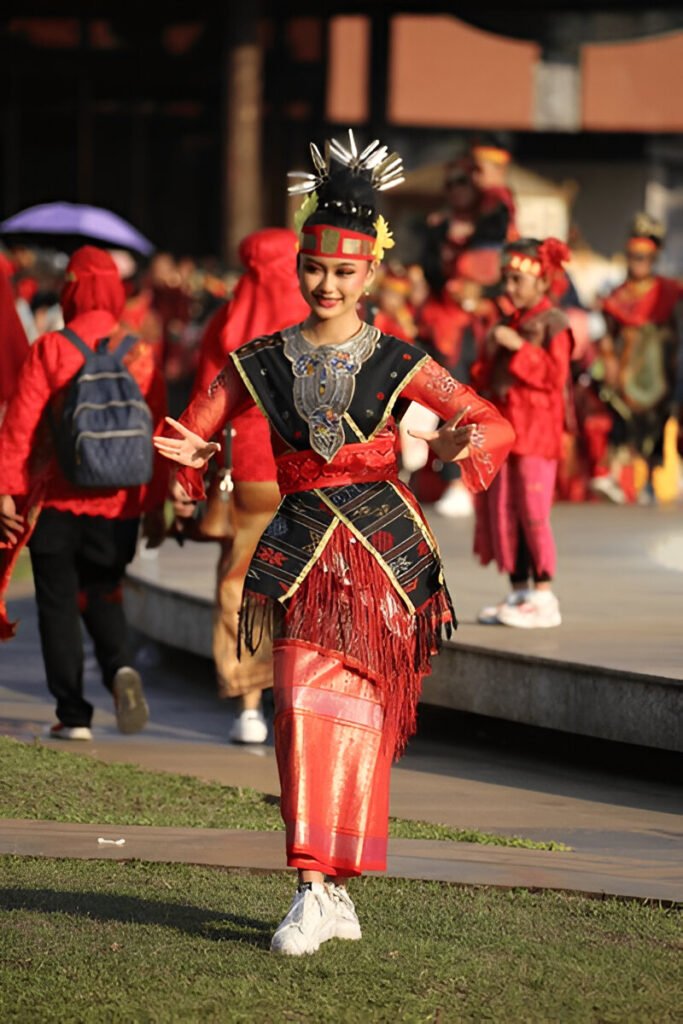
Indonesia is famous for its diverse cultures and traditions, which is better reflected in their traditional clothing. From the vibrant colors and unique patterns of Batak ulos to the regal elegance of Javanese court attire, each one has its own historical and cultural significance.
In this blog, we will delve into the attractive world of traditional Indonesian clothing, revealing their history along with their cultural values. Now, let’s dive into this amazing journey:
1. Aesan Gede: South Sumatra
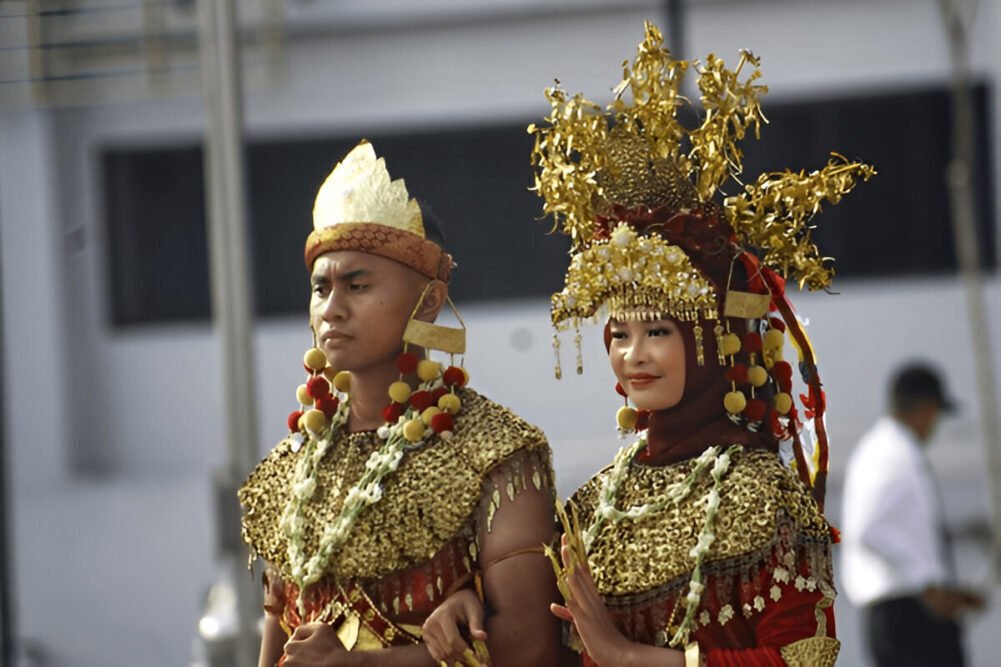
Aesan Gede, named after Sumatra’s ancient moniker Suwarna-dwipa (meaning ‘island of gold’), is a gold-themed attire historically worn by nobility. This songket fabric, adorned with gold accessories, is prominently featured in wedding ceremonies, symbolizing the grandeur and prestige of the wearer. The attire has unique significance in the “munggah” ceremony, a crucial part of the wedding rites. It incorporates elements from the Hindu-Buddhist traditions of the Sriwijaya Kingdom.
Reflecting the historical grandeur and cultural sophistication of the Sriwijaya Empire, Aesan Gede is basically stunning gold-threaded attire that shows the rich cultural heritage of South Sumatra. The songket fabric, with gold-themed accessories, is worn during important ceremonies like the “munggah” in weddings, which shows its importance in traditional rites. This attire not only signifies nobility but also connects the wearer to the ancient cultural roots of the region.
2. Teluk Belanga and Kebaya Labuh: Riau and Riau Islands
The traditional attires of Kebaya Labuh and Teluk Belanga from the Riau and Riau Islands reflect the rich cultural heritage of the Malay community. The Kebaya Labuh, a long kebaya extending to the knees, is paired with batik or songket skirts and adorned with intricate embroidery, typically worn by women during formal events and weddings. The Teluk Belanga, worn by men, consists of a long-sleeved shirt, matching trousers, and a headpiece called a tanjak, often used in official ceremonies and embodying Islamic values and Malay traditions.
Teluk Belanga and Kebaya Labuh are traditional garments that embody the rich cultural heritage and Islamic values of the Malay community in Riau. The Kebaya Labuh, along with batik or songket skirts, is a long, elegant dress for women, while the Teluk Belanga is for men, which includes a long-sleeved shirt and matching trousers. These garments are generally worn during formal events and weddings because of their unique craftsmanship and cultural significance in the region.
3. Baju Kurung: Jambi
Baju Kurung, a traditional outfit of Jambi, is crafted from luxurious velvet, commonly in red with unique gold embroidery floral patterns like tagapo and jasmine. This attire is worn by both men and women during formal events and weddings. Men’s Baju Kurung includes cangge (pants) and a lacak (velvet headpiece) reinforced with paper to stand upright, often accompanied by a keris (traditional dagger). Women’s Baju Kurung is paired with songket skirts and accessorized with teratai dada (a lotus-shaped chest covering), long necklaces, bracelets, and distinctive telukuk headpieces, usually made from gold or gold-plated materials, which shows the elegance and cultural heritage of the attire.
Baju Kurung shows elegance and social status with its complicated gold embroidery. The velvet fabric, generally in red with complex floral patterns, makes it an attractive piece during formal events and weddings. Men’s attire includes cangge pants and a lacak headpiece, while women’s attire is complemented by songket skirts and elaborate accessories, which shows the rich cultural heritage and sophistication of Jambi.
4. Rejang Lebong: Bengkulu
The Rejang Lebong tribe, found in various regions of Bengkulu, is renowned for its distinctive traditional bridal attire. Women’s bridal wear includes a sequined blouse, an embroidered gold thread skirt, and black sandals, complemented by peacock feather headpieces and lotus-shaped shoulder decorations. They also wear necklaces, waist pendants, and keroncong bracelets. Men’s attire includes white shirts, black jackets with gold chains, gold-embroidered shawls, and songket fabric belts, often holding a keris. Both bride and groom wear traditional shoes or sandals, reflecting the tribe’s rich artistic heritage.
Rejang Lebong’s bridal attire, decorated with peacock feathers and gold embellishments, reflects the tribe’s rich cultural heritage. Women wear sequined blouses and embroidered skirts, while men wear white shirts with black jackets, gold chains, and songket fabric belts. This attire is worn during significant cultural and traditional wedding ceremonies, which shows the intricate craftsmanship and cultural significance of the Rejang Lebong tribe.
5. Baju Bedahan and Kebaya Sunda: The West Java
Baju Bedahan is a traditional outfit from West Java, typically worn by middle-class Sundanese men. This white shirt, resembling a jacket with a collar, is paired with batik cloth, a belt, a headpiece, a gold chain watch, and traditional footwear. Historically, it was the attire of choice for civil servants during the Dutch colonial period. In contrast, Sundanese women wear Kebaya Sunda, a long blouse with a U-shaped collar that extends over the hips and thighs. Often seen in bright colors like red, light purple, or white, this attire is suitable for various social strata.
Reflecting the cultural heritage and social status within Sundanese society during the Dutch colonial era, Baju Bedahan and Kebaya Sunda are iconic traditional attires. The white shirt of Baju Bedahan is complemented by batik cloth and traditional accessories, while Kebaya Sunda, with its vibrant colors and elegant design, is worn by women for various social events and ceremonies, which shows the rich cultural heritage of West Java.
6. Basahan: Central Java
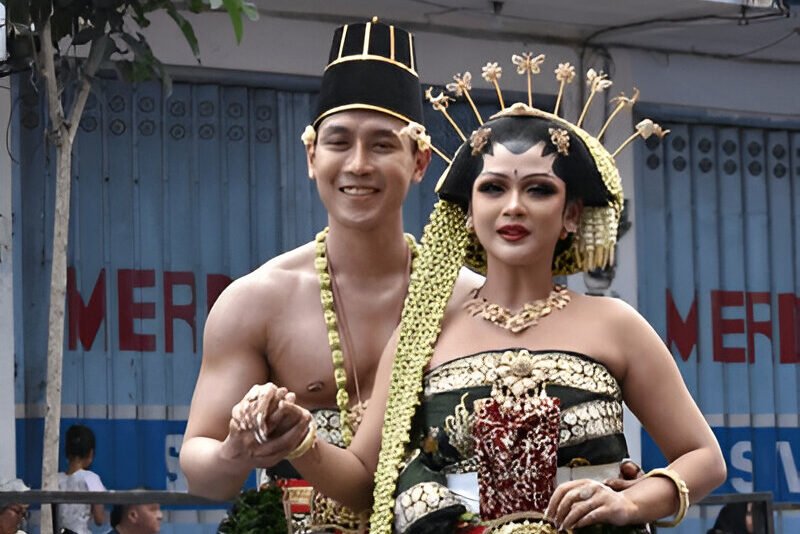
Central Java, the birthplace of batik art, boasts the traditional Basahan attire, often worn by brides and grooms during weddings. Originating from the ancient Mataram Kingdom, Basahan is distinctive for its lack of upper body clothing. Men wear a luxurious necklace and a dodot cloth covering the lower body, adorned with a keris (traditional blade), while women wear a kemben and dodot. The attire includes elaborate headpieces, beautiful necklaces, and arm decorations, symbolizing surrender to God and hoping for a harmonious and prosperous married life.
Rooted in the ancient Mataram Kingdom, Basahan attire symbolizes purity and surrender to God in Javanese weddings. Men don luxurious necklaces and dodot cloth, while women wear kemben and dodot with intricate headpieces. This traditional attire, rich in cultural significance, is worn by brides and grooms during weddings, reflecting the deep philosophical and artistic heritage of Central Java.
7. Ksatrian Ageng: Yogyakarta’s Palace
Ksatrian Ageng is the traditional attire for male palace officials in Yogyakarta, consisting of a black velvet laken jacket adorned with keris and batik motifs with golden edges. The black trousers complement the jacket, while a batik cloth is wrapped around the waist, ending above the knees. The outfit is completed with various accessories and a headpiece, symbolizing elegance and bravery. This attire must be maintained according to palace regulations, reflecting the high standards of Yogyakarta’s royal traditions.
Symbolizing elegance and bravery, Ksatrian Ageng is the traditional attire for male officials in Yogyakarta. The black velvet laken jacket, decorated with keris and batik motifs with golden edges, is paired with black trousers and a batik cloth.
8. Ulos: North Sumatra
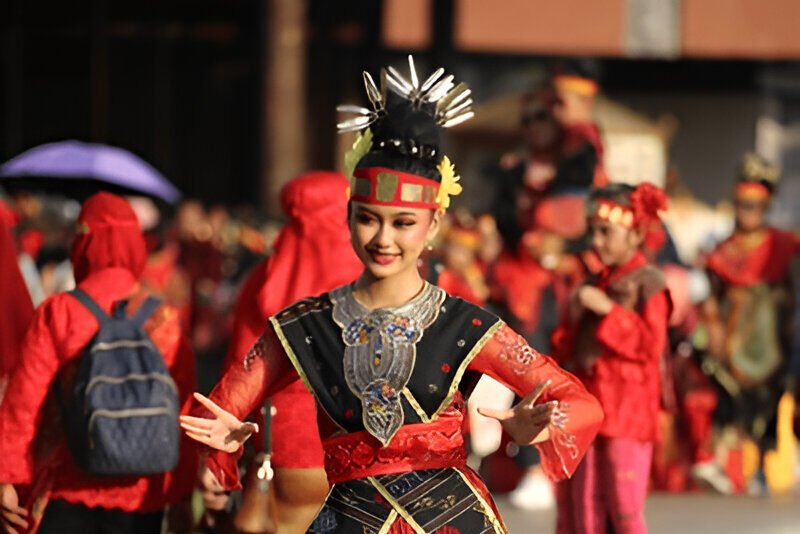
Originally used to keep warm in the cool highland climate, ulos has transformed into a powerful symbol of love, unity, and blessings within the Batak community. The intricate weaving of ulos, featuring vibrant colors and detailed patterns, signifies various aspects of life and social status. For example, the Ulos Ragidup represents longevity and prosperity, while the Ulos Ragi Hotang is often given to newlyweds to symbolize a strong marital bond. The tradition of mangulosi, the ceremonial draping of ulos, highlights its importance in expressing affection and respect during significant life events such as weddings and births.
Ulos, a traditional attire of Batak, is the symbol of love, unity, and blessings during important events of life. The vibrant colors and intricate patterns of ulos reflect its rich cultural heritage along with the social nuances of the Batak people. The ceremonial practice of mangulosi underscores the cloth’s role in significant ceremonies, making it a cherished item that conveys deep emotional and cultural significance.
Conclusion
The diversity of Indonesian traditional clothing is a mirror to the nation’s rich cultural heritage. From the symbolic ulos of North Sumatra to the regal attire of Javanese courts, each garment tells a story, reflecting their unique traditions, beliefs, and social hierarchies of that region.
By preserving and celebrating these traditional attires, Indonesia gives respect to its past while inspiring future generations. As we continue to appreciate the beauty and significance of their culture, we have to ensure that the legacy of Indonesia’s rich cultural heritage continues.