


Introduction
Are you thinking about a trip to Indonesia? Then the amazing Borneo will definitely catch your attention. While you can explore orangutans in Sumatra & other regions of Borneo, but today we will particularly focus on Tanjung Puting National Park.
Here, we will help you in planning your trip while emphasizing the ecological significance of this area. So, let’s dive in to this amazing journey
Tanjung Puting National Park
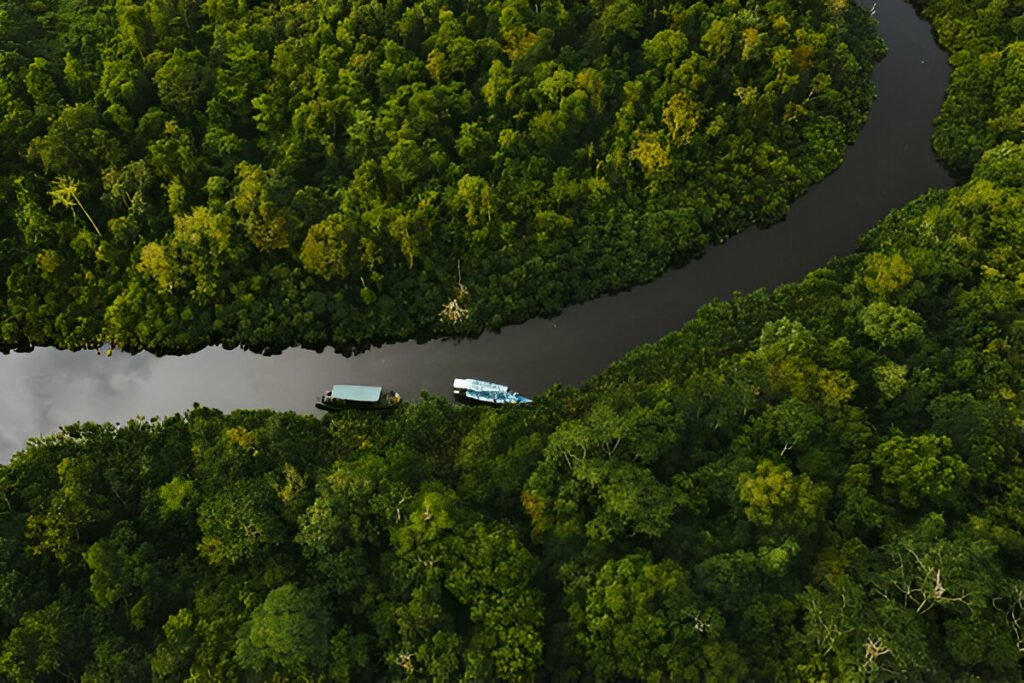
Tanjung Park is situated in Kalimantan i.e. the part of Borneo, Indonesia. It covers about 416,000 hectares of area.
Ecosystem: The park features a diverse landscape, including:
- Tropical rainforests
- Mangroves
- Salt flats
Conservation Status: Designated as a UNESCO Biosphere Reserve in 1977, the park is crucial for the conservation of orangutans, but it faces significant threats:
- Illegal logging
- Expansion of palm oil plantations leads to endangering the habitat orangutan.
- The park serves as a important conservation center, shifting orangutans from deforested areas and rehabilitating them here for their reintegration into the wild.
The Bornean Orangutan: Facts and Features
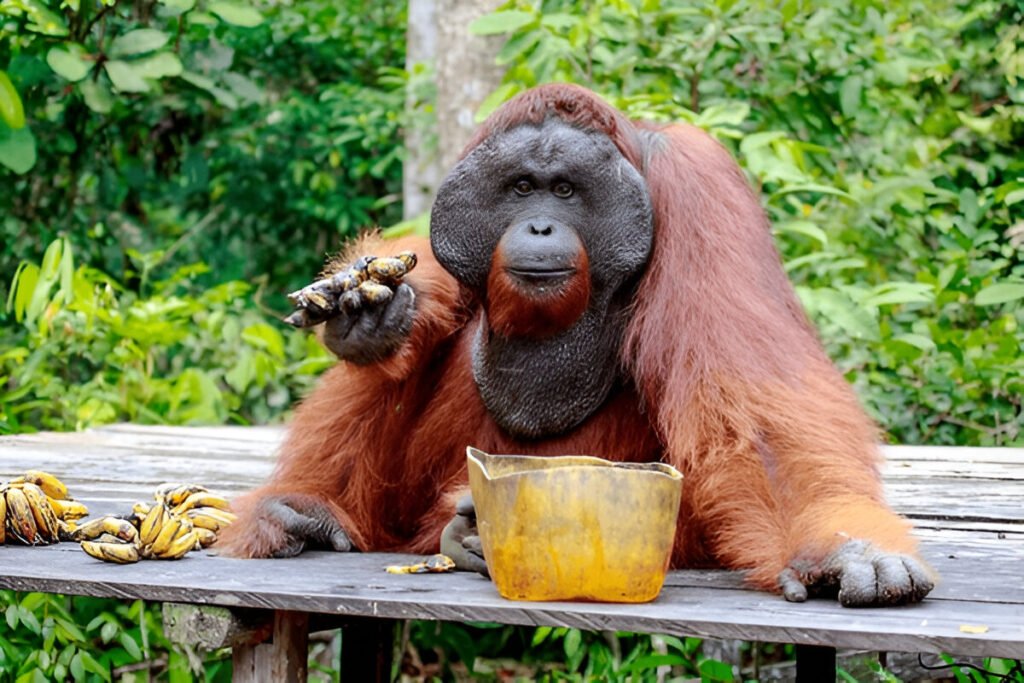
The Bornean orangutan (derived from the Malay/Indonesian words Orang meaning person and Hutan meaning jungle) is an endangered species, with only about 9,000 remaining in the wild. Here are some key facts:
- Genetic Makeup: Shares 97% of its DNA with humans.
Physical Traits:
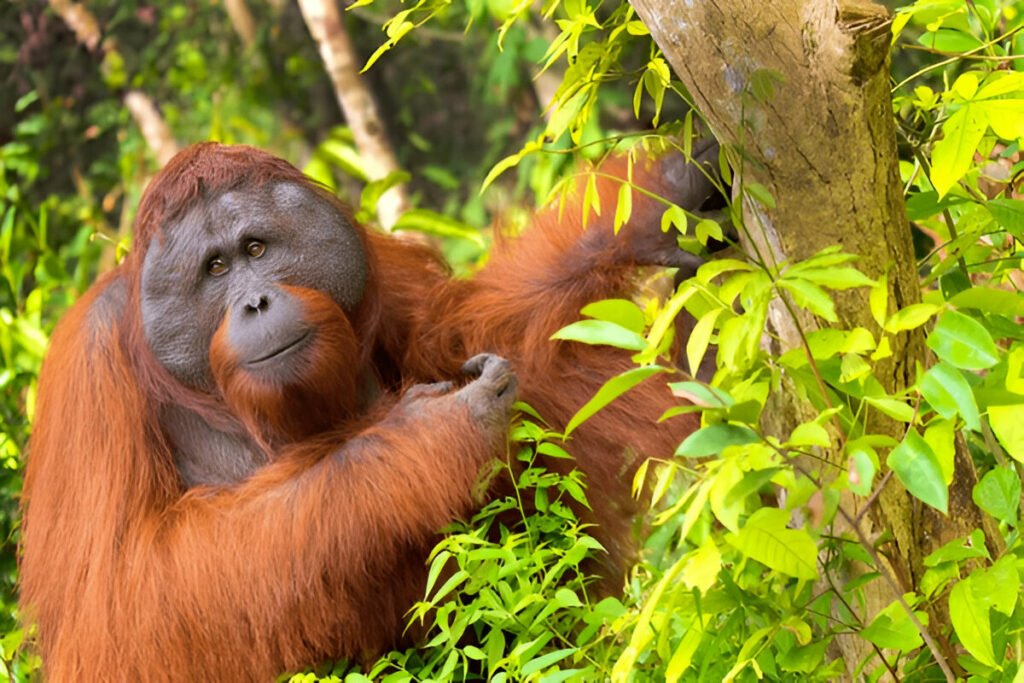
- Distinct reddish-orange fur
- Males have prominent cheek pads and beards; females do not.
- Lifespan: Typically lives 35 to 45 years.
Size:
- Females: ~40 kg
- Males: ~80 kg and can reach 1.5 meters in height.
Reproduction and Parenting
- Mating: Males and females mate for a few days; gestation lasts 8 to 9 months.
Mother-Offspring Bond:
- Babies are born in nests the mother constructs.
- Offspring stay with their mothers for up to 7 years, learning survival skills.
- Females typically have 2 to 3 offspring in their lifetime.
Observing Orangutans
- Wild vs. Rehabilitated one: Wild orangutans are more elusive, usually spotted on riverbanks or deep in the jungle. Rehabilitated orangutans are easier to see, especially at feeding stations.
- Communication: Wild orangutans may make kiss like sounds to signal discomfort around humans.
Important Tips
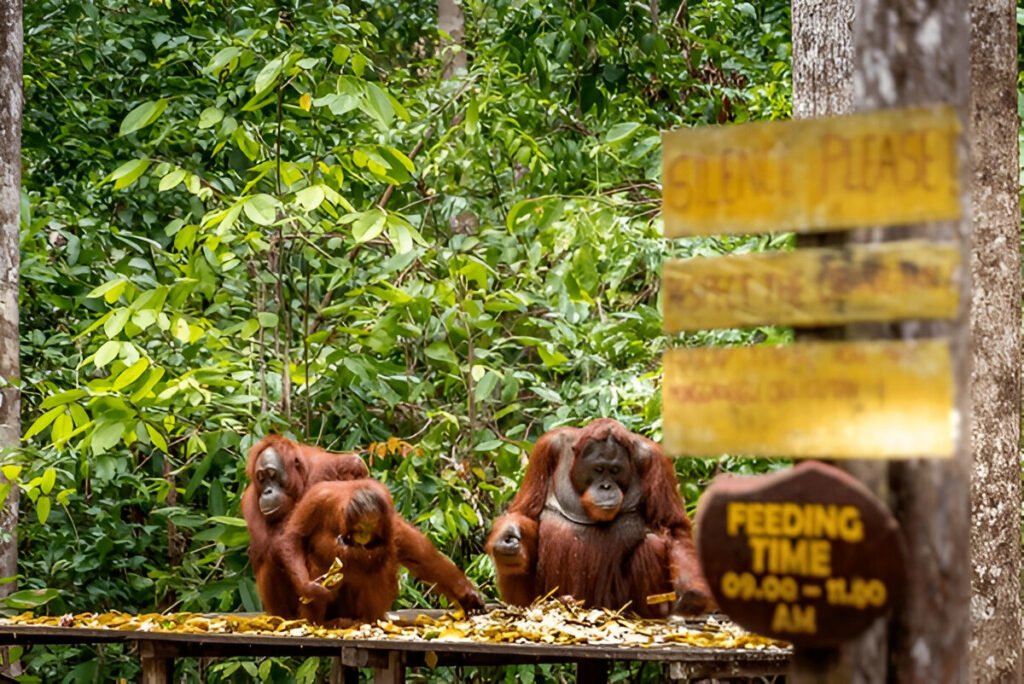
Safety Tips
- Do not make physical contact (touch) the orangutans; both humans and orangutans can transmit diseases to each other.
Feeding tips
- Rangers provide food like bananas, milk, and fruits to supplement wild diets, especially during lean seasons.
- Tourists are strictly prohibited from feeding the orangutans directly to prevent aggressive behavior.
Life Aboard the Klotok
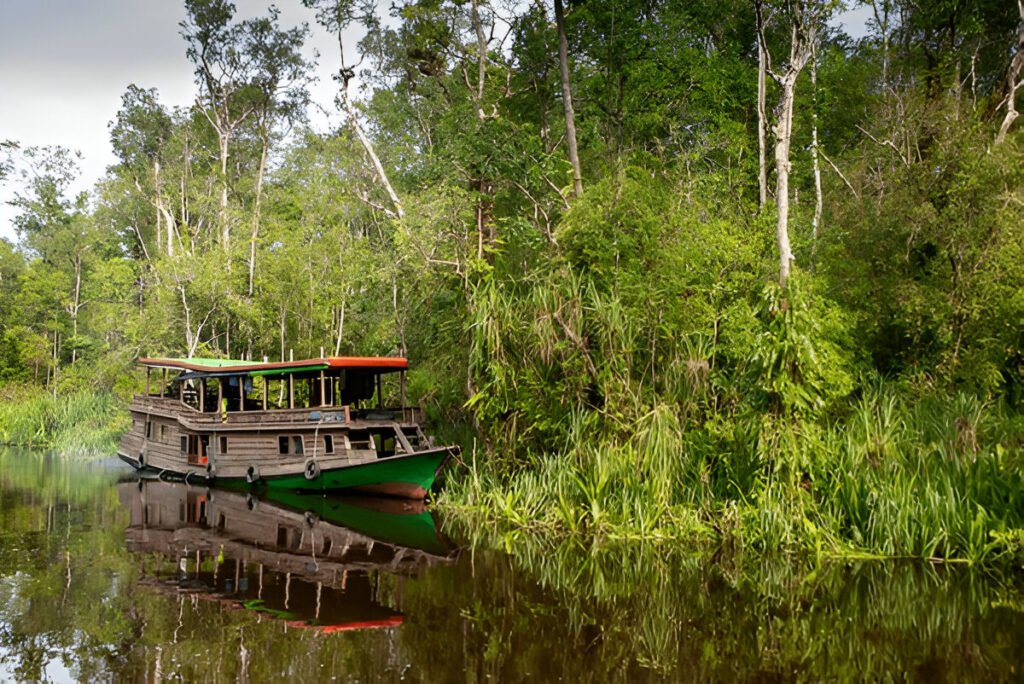
Most excursions in Tanjung Puting National Park involve travel on a traditional houseboat known as a klotok. These wooden boats serve as your floating accommodation during your stay (not applicable if you choose a hotel or lodge). The name “klotok” derives from the sound of its engine, which produces a rhythmic “kolotok” sound.
Originally, klotoks were used for transporting people and goods along the river, but they have since been adapted for tourism. Various sizes are available, accommodating groups from one or two people to larger parties of 1314. Larger groups are often split into multiple boats for added comfort.
Klotoks typically feature two decks: the lower deck houses the captain and crew, as well as the kitchen and common bathroom facilities (which may vary based on the boat’s size). The upper deck is reserved for guests.
These boats come equipped with roofs to shield guests from rain, and their designs optimize space for comfort. While the boats are relatively simple, the dedicated crew and guides ensure a pleasant experience, making this a highlight of your Indonesian adventure.
Traveling to Pangkalan Bun and Klotok Embarkation
From Direct Flights:
- From Semarang: A direct flight available. Organize private car transfers as needed.
- From Jakarta: Fly directly and consider an airport hotel for convenience.
- From Surabaya: Similar direct flight options with transit hotels.
Plans for Delayed Flights
To fully enjoy the experience, it’s best to arrive in Pangkalan Bun by noon to make it to the first camp visit at 3 PM. If your flight is delayed and you’re on a private trip, the crew will still wait for you, but you risk missing the initial camp visit. However, if you’re on a shared trip, the klotok will depart on schedule to accommodate the rest of the group.
The Purpose of Feeding Camps
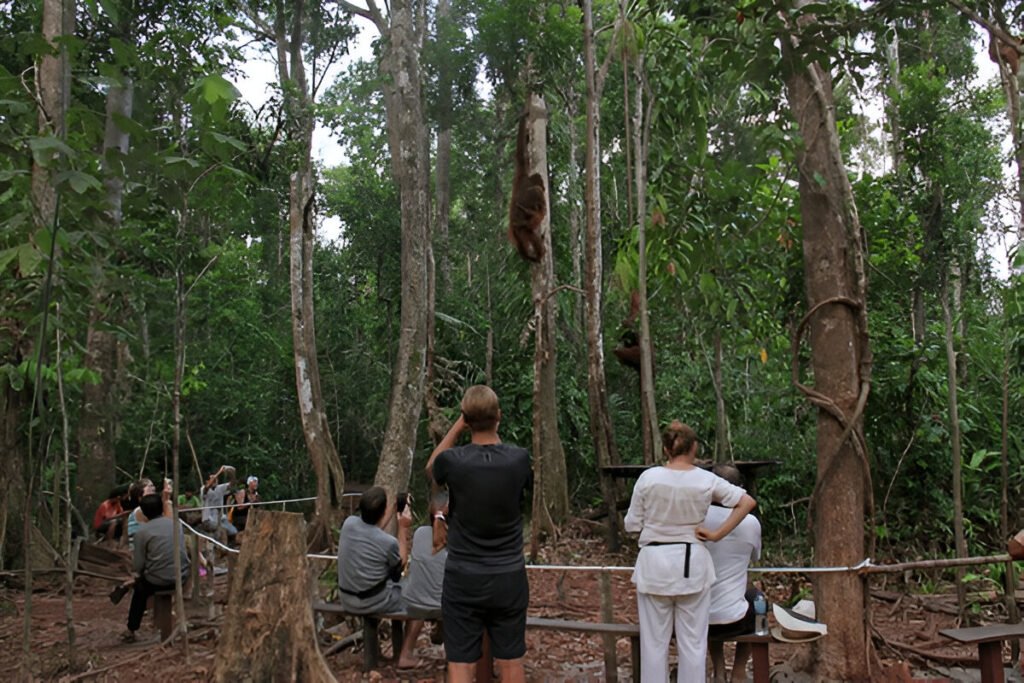
Feeding camps were established to provide orangutans with supplemental food, reducing the need for them to venture outside the park boundaries. Each camp has designated feeding times, with rangers calling the orangutans to let them know when food is available. This ensures that even when tourism levels fluctuate, the feeding continues, promoting the welfare of these primates.
Remember: Feeding orangutans is not intended for tourism profit.
The Feeding Camps
1. Tanjung Harapan Camp
- Typically visited on the first day of your expedition, Tanjung Harapan, or “Cape of Hope,” is conveniently located near the klotok’s departure point. The afternoon feeding time (3 PM) makes it an ideal starting point for your jungle adventure.
- As this camp is situated in wetland areas, be sure to bring adequate mosquito repellent.
2. Pondok Tanggui Camp
- This camp is generally visited in the morning after breakfast (around 9 AM). Located within a denser jungle, the route is rich with tropical flora, and you might spot the Rafflesia, the largest flower in the world.
- This additional camp was created to help orangutans from different groups remain within the National Park, as the overcrowded Leakey camp needed alternative sites for rehabilitation.
3. Camp Leakey
- Founded in 1971, pivotal for orangutan research and rehabilitation.
- Observations and feeding occur at 14:00, with opportunities for gentle hikes to discover more wildlife.
Conclusion
By following this guide, you can prepare for an unforgettable journey into the heart of Borneo, where you’ll find one of the world’s most remarkable creatures in their natural habitat while contributing to their conservation. So now, what are you waiting for – get ready, book your trip and dive in to explore this wonderful creation.