


Introduction
Indonesia an island country, is the home to a range of cultures and traditions. Beyond the amazing cities and famous tourist spots, here lies a world of hidden tribes, each with its own unique customs, beliefs and way of life. These tribes provides an amazing glimpse of the past, maintaining ancient traditions and beliefs from centuries.
In this blog post, we will explore some of Indonesia’s hidden tribes, knowing about their customs and traditions. From the tree-dwelling Korowai to the seafaring Bajau, each tribe offers a unique perspective on life and the way of living.
1. Bajau Tribe
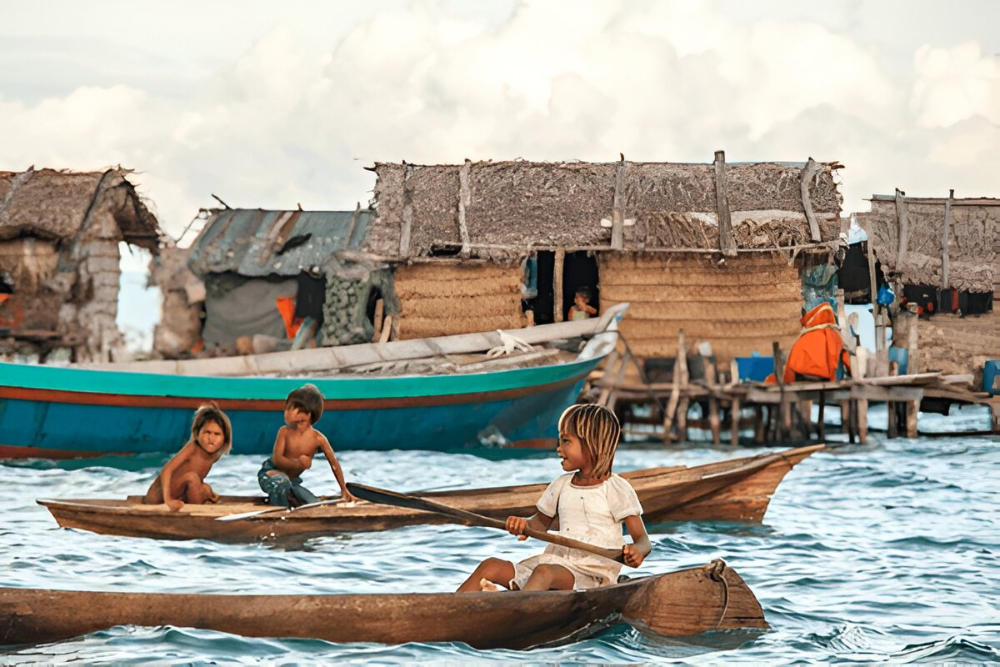
Are you ready to be amazed by the Bajau people, who make their home right on the sea. They scattered along the coasts of Indonesia, the Philippines, and Malaysia, the Bajau Tribe also known as the sea gypsies. They spend their entire lives at sea, where the ocean serves as both their playground along with hunting ground.
These boat-dwelling nomads live without the comforts of modern life. Stateless and without citizenship, they have no access to public education. Yet, the Bajau have developed extraordinary physical abilities. They can see more clearly underwater and hold their breath far longer than most people.
Water is so integral to their lives that they intentionally rupture their eardrums at a young age, which means some of the older Bajau might be a bit hard of hearing.
When hunting in the ocean depths, they rely on simple, handmade tools: wooden goggles, spear guns crafted from boat wood, tire rubber, and scrap metal. These tools are surprisingly effective for their underwater precision. Upon returning to shore, the Bajau will astonish you with a variety of crustaceans you never imagined could be eaten!
2. Asmat Tribe
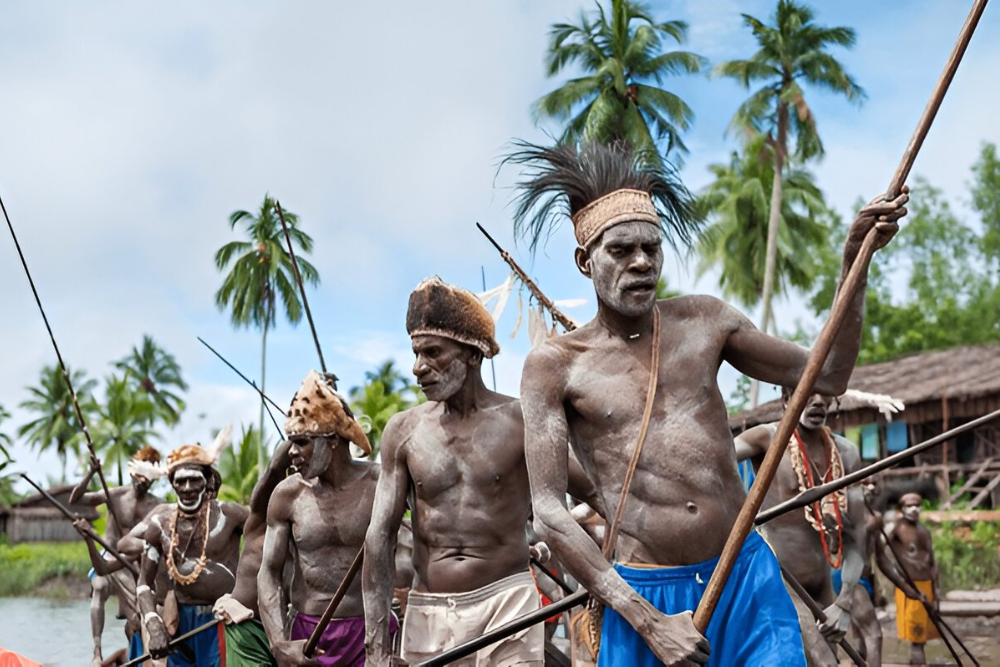
Before their beheading rituals became widely known, the Asmat Tribe was celebrated for their extraordinary woodcarving skills. These indigenous people, who declare themselves descendants of God, live in the remote, unexplored regions of Papua. Their primitive homes are surrounded by lush forests and crocodile-filled rivers.
In the past, Asmat men had to hunt an enemy’s head and offer the body for cannibalistic consumption to prove their manliness. But today, the Asmat are known for their decorative dresses added with bundles of feathers, showcasing their unique tribal identity, costumes, and art.
Visiting the Asmat can be a bit scary due to the decorative skulls placed around, but it is an eye-opening experience that immerses you in their unique way of life. A simpler life? Not quite. The Asmat now focus their energy on hunting animals, creating sculptures, and carving treasures for their annual “Asmat Woodcarving Festival.”
The disappearance of Michael Rockefeller, the son of an American governor, added to the tribe’s mystique. While the story of his fate remains a dark chapter, it is important to remember the Asmat for their rich cultural heritage and artistic achievements.
3. Baduy Tribe
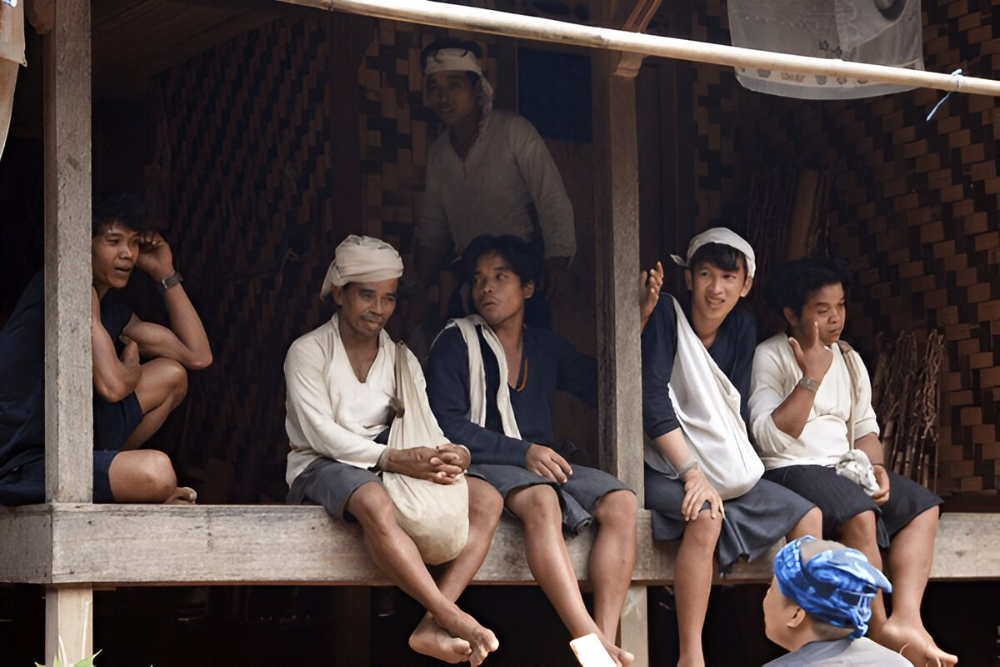
Can you imagine a world without modern technology i.e. no phones, cameras, or electronics of any kind. This is the reality for the Baduy Tribe, who have chosen to live in voluntary isolation, embracing an ultra-simplistic lifestyle. They receive no formal education or healthcare and do not depend on any government support. Instead, their lives are guided by a unique set of cultural and spiritual practices, effectively sealing their community off from the rest of the world.
Visiting the Baduy Tribe offers a complete digital detox. Don’t expect to capture your experience with photos; even a glimpse of a smartphone or camera can upset them. The journey to their community is scenic but challenging, requiring a 10-kilometer hike. Make sure to wear suitable trekking shoes for safety.
You can explore the Outer Baduy villages with a permit and a guide. However, be aware that foreigners are strictly prohibited from entering Inner Bay. This sacred area is home to a mountain that the Baduy believe must be protected to prevent the end of the world.
4. Korowai Tribe
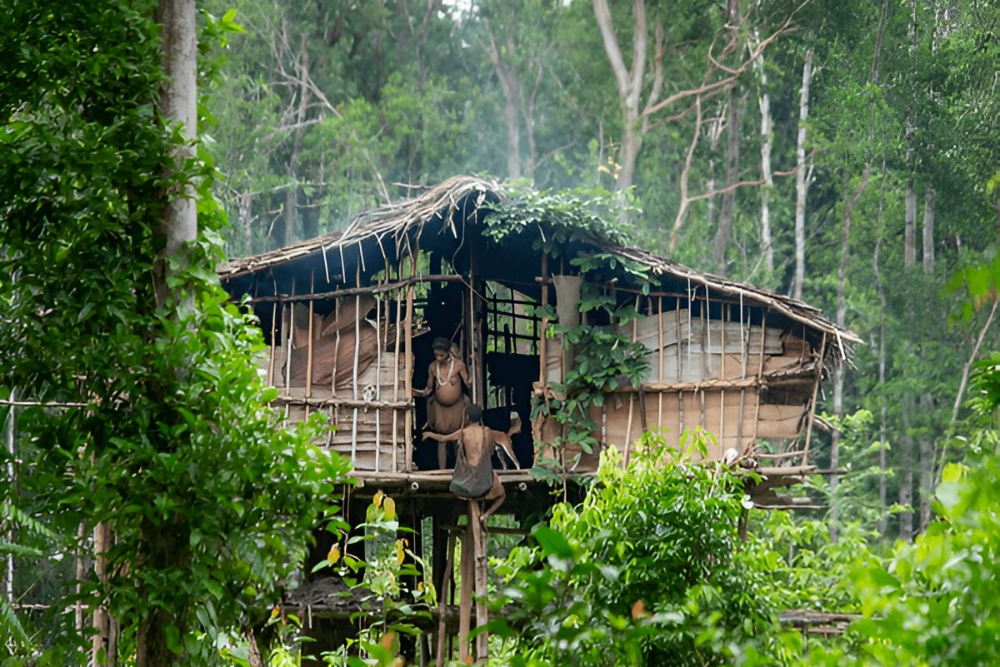
In the world where children are welcomed with the luxury, here the Korowai Tribe offers a stark contrast. Here, pregnant women are sent alone into the jungle, to give birth by themselves. These hunter-gatherers in West Papua have lived in treehouses for centuries to avoid attacks from rival clans.
The Korowai Tribe values faith, believing in spirits and reincarnation. They pay special tribute to their ancestors with occasional feasts. Without medicine to cure wild diseases, their lifespans are often short, with few elderly but many children. Though now, they not practicing cannibalism, the tribe has become an attraction for tourists.
But government construction of cities and roads in the rainforest threatens their way of life, potentially endangering the tribe. And due to several incidents with local police, it is suspected that the Korowai have ceased their ritual cannibalistic practices.
5. Dani Tribe
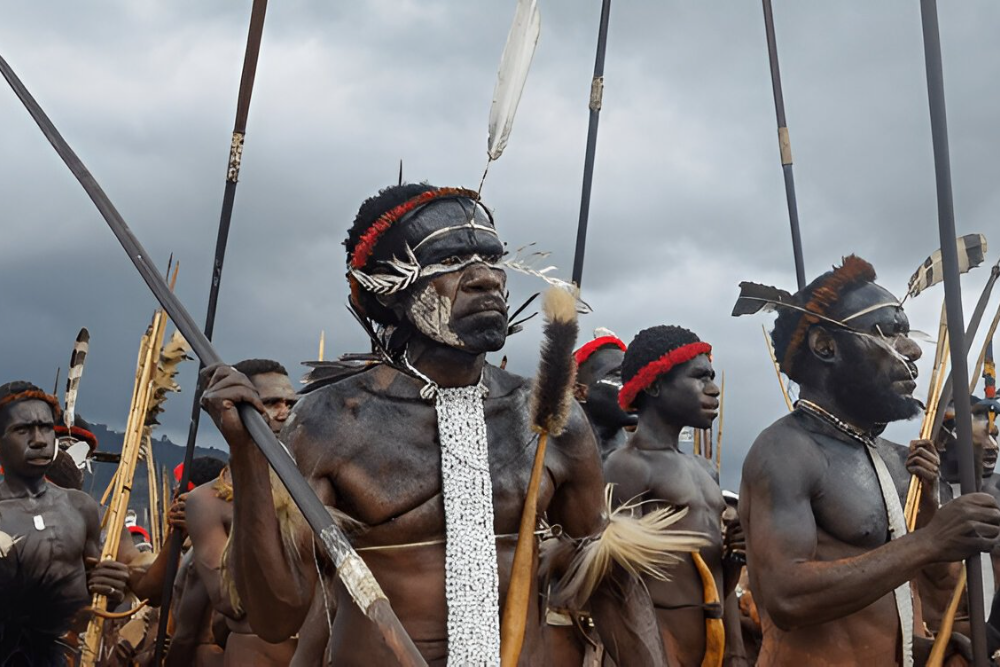
In the highlands of the Baliem Valley of Irian Jaya, you will explore the Dani Tribe, a former cannibalist community living alongside the Yali and Moni tribes. This remote area is hard to reach, but the journey will worth it to witness their unique way of life.
Despite modernization bringing changes, the Dani Tribe’s core beliefs and customs remain some of the most intriguing. They hold deep respect for the spirits of their ancestors. In their community, pigs play a crucial role, and every social gathering dedicated to ancestors concludes with a final pork feast.
One of their unique customs is their liberal view towards clothing. When visiting, you will see men wearing an unusual piece of underwear known as the Koteka, a sheath made from dried-out gourd to cover their genitals.
The Dani tribal women are remarkable too. Some of them have severed fingers due to an ancient funeral practice where women voluntarily mutilate their fingers when a family member dies as a form of mourning. This custom is now banned.
With such unique qualities and customs, the Dani Tribe is truly fascinating to engage with. You should consider visiting in August, when you can witness the annual Baliem Valley Festival held in Wamena. This festival is a great time to sample their delicious earth-cooked meals and experience the rich tribal cultures.
During this special occasion, various tribes from the Baliem Valley region send groups of representatives to showcase their traditions, dances, and cultures. The festivities end with a series of mock battles, providing a glimpse into their vibrant heritage.
Conclusion
Indonesia’s hidden tribes are symbol to the rich cultural heritage of the country. Their unique customs, traditions, and way of life provide a better understanding of the past and acts as a reminder of the importance of maintaining cultural diversity.
As the world is continuously evolving, it is necessary to support and protect these hidden tribes. By promoting cultural understanding and tourism that benefits local communities, we can help then go ensure that their traditions and way of life continue for generations to come.