


Introduction
Indonesia is known for its diverse cultures and traditions, which show its cultural heritage through its traditional clothing. From the elegant Kebaya Rancongan of East Java to the vibrant Pattuqduq Towaine of West Sulawesi, each region offers a unique glimpse into its history and identity. This blog delves you into the fascinating world of Indonesian traditional attire, exploring its significance, materials, craftsmanship, and the occasions of their use. Now, let’s dive in through the diverse and captivating world of Indonesian fashion.
1. Pese’an and Kebaya Rancongan: East Java
Central and East Java share many cultural similarities, including their traditional attire, due to their historical connections. However, the island of Madura in East Java stands out with its unique traditional clothing. The Madurese attire, Pese’an, is known for its cultural significance and simplicity, often worn during special occasions. This attire includes long-sleeved, loose cotton shirts without buttons paired with gomboran pants, plekat sarongs, and terompah sandals. Men generally carry a celurit i. e. Sickle as part of their attire. Women wear Kebaya Ranconga i. e. a form-fitting brocade or cotton kebaya decorated with floral or plain patterns. This attire combines comfort with tradition, emphasizing practicality and cultural heritage.
2. Payas Agung: Bali
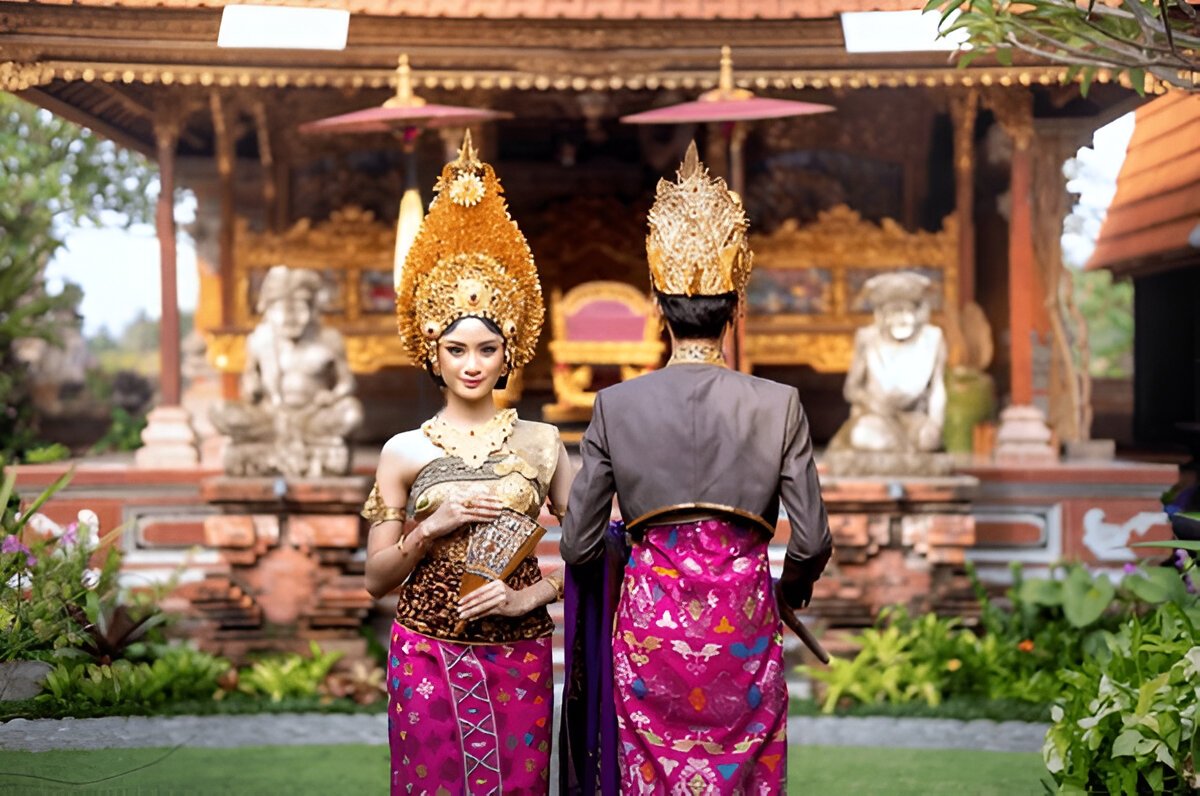
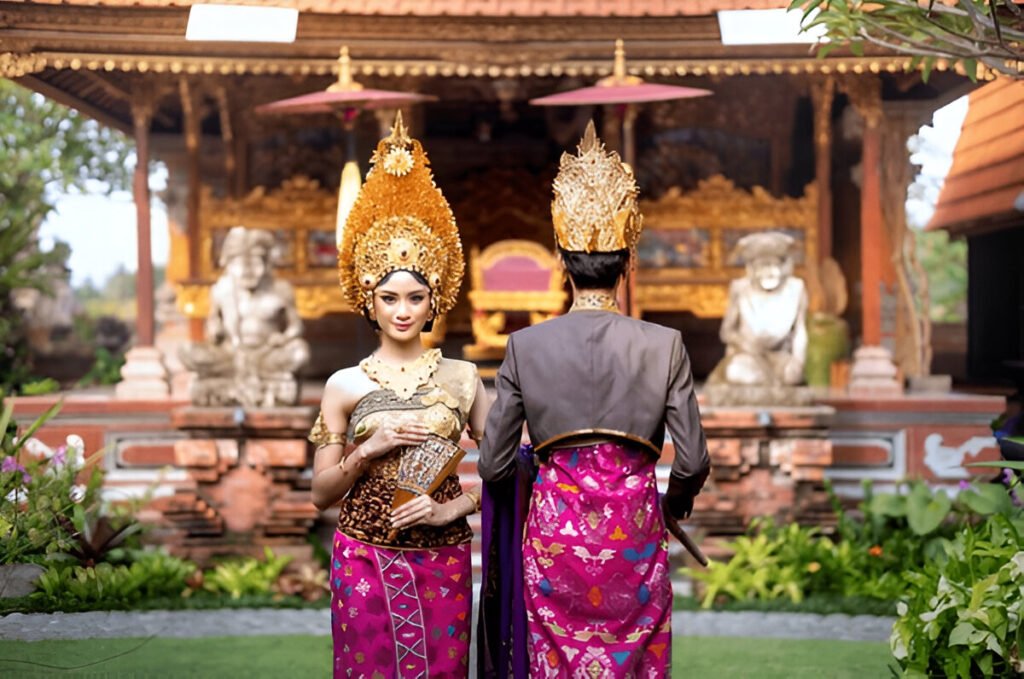
Bali, like other regions, has various traditional attires for different occasions, but Payas Agung stands out as the most luxurious. Worn during weddings or tooth-filing ceremonies, Payas Agung signifies luxury and special occasions. The outfit of bride has a high crown along with colorful fabric and also a long wrap called tapih from chest to toes, layered with kemben and kamen prada extending to the ankles. The bride also wears a srinata, an amazing forehead decoration, and a crown decorated with sandats and gold flowers. Accessories includes- shoulder bracelet and a waist belt. This attire is reserved for significant cultural and ceremonial events, showcasing Bali’s rich cultural heritage.
3. King Baba and King Bibinge: West Borneo
On Borneo Island, the Dayak Tribe of West Borneo shows their cultural heritage through the traditional attire of King Baba and King Bibinge. King Baba, worn by Dayak men, is crafted from flattened tree bark, specifically from the ampuro or kapuo trees. The term “King Baba” means “men’s clothing” in the Dayak language. The bark undergoes a process of soaking, beating to extract fibers, drying, and painting with ethnic Dayak patterns using natural dyes. Accessories includes a headband decorated with bird feathers and a traditional weapon, the mandau. King Bibinge, the female counterpart, is similarly crafted but features additional chest coverings, beaded decorations, and accessories like bracelets and necklaces made from roots and animal bones. Both attires are sleeveless and highlight the Dayak’s connection to nature and traditional craftsmanship.
4. Ta’a and Sapei Sapaq: North Borneo
The Dayak Tribe, as the predominant inhabitants of Borneo, significantly influences the island’s culture, including its traditional attire. Ta’a and Sapei Sapaq are traditional clothes of the Dayak people of North Kalimantan. Ta’a, worn by women, consists of a sleeveless velvet vest and a matching skirt adorned with beads and feathers, symbolizing social status through specific motifs. Sapei Sapaq, worn by men, includes short pants called abet kaboq, a vest, and accessories such as the mandau (traditional sword) and animal-tooth necklaces. Both attires use colors and designs that reflect cultural meanings, such as purity and strength, and are worn during traditional ceremonies and rituals.
5. Babajun Kun Kalung Pacinan: South Borneo
In South Borneo, the Banjar Tribe’s traditional attire, Babaju Kun Galung Pacinan, reflects a blend of local and Chinese influences. Known for its bright colors and intricate patterns, this outfit includes a long shirt and trousers often embroidered with detailed motifs. The name “Pacinan” signifies the historical Chinese trade connections in the region. Typically worn during traditional ceremonies and cultural events, this attire symbolizes the rich cultural heritage and cultural fusion of the Banjar people. The craftsmanship and vibrant designs of Babaju Kun Galung Pacinan highlight the unique cultural identity of South Borneo.
6. Kustin: East Borneo
Kustin, originating from the ancient kingdom of Kutai, is traditional attire still worn by the Kutai Tribe in East Borneo. Crafted from black velvet, it features intricate gold embroidery known as pasmen. The women’s version includes a long shirt paired with a sarong, adorned with Tapeh Berumbai and a wapen-shaped chest ornament. The men’s Baju Kustin consists of a long-sleeved shirt and black trousers, complemented by a dodot rambut and a Setorong headpiece decorated with feathers and gold. Both attires reflect the elegance and cultural heritage of the Kutai Tribe, symbolizing their rich history and traditions.
7. Biliu and Makuta: Gorontalo
Biliu and Makuta are the traditional wedding attires of the Gorontalo people, showcasing a blend of cultural and Islamic influences. The mukuta is for men which includes a laapia bantali sibi headpiece as like that of bird feathers, symbolizing leadership & gentleness. Men wears bako necklace which shows marital commitment & pasimeni decoration which represents household harmony. Biliu is for women and it is more elaborate, offering accessories like the baya lo boute headband, tuhi-tuhi headpiece with seven pendants which indicates ties between seven kingdoms, and a lai-lai headpiece showing noble character and purity. These attires are commonly seen at weddings and cultural events like the nationally recognized Saronde Festival.
8. Pattuqduq Towaine: West Sulawesi
Pattuqduq Towaine is a traditional attire of the Mandar tribe of West Sulawesi and it is primarily worn by women during the Pattuqduq traditional dance. Made from bright, colorful fabrics, it is adorned with intricate embroidery and accessories that highlight the wearer’s elegance and grace. This attire reflects the rich cultural heritage of the Mandar people and is an integral part of their ceremonial attire, especially during cultural and festive events. The vibrant colors and detailed craftsmanship of Pattuqduq Towaine emphasize the beauty and cultural significance of the Mandar traditions.
9. Nggembe: Central Sulawesi
Nggembe is the traditional attire of the Kaili Tlooseof Central Sulawesi, which are generally worn by women during cultural events and ceremonies. This loose, round-collared garment with short sleeves is complemented by various accessories such as sampo dada, dali taroe (long earrings), gemo (necklace), ponto date (long bracelet), and a pende (belt made of gold or silver). And lastly an accessory named Buya Sabe Kumbaja sarong completes the outfit. Generally used colors are red, yellow, and black, but other colors like white, green, and purple are also used for making attires. Nggembe reflects the cultural heritage and artistic skills of the Kaili people, which shows their rich traditions and craftsmanship.
Conclusion
Indonesia’s traditional attire is a collection of the nation’s rich cultural heritage and artistic expression. Each attire, from the simple Pese’an to the complex one, i.e., Payas Agung, tells a unique story of its people, about their beliefs and their aspirations. By preserving and promoting these traditional attires, they respect the past while inspiring future generations. As we continue to explore the diverse collection of Indonesian fashion, we have to appreciate the beauty, craftsmanship, and cultural significance of these unique and amazing garments.