



Japan’s temples and shrines offer some of the most breathtaking backdrops for cherry blossom viewing. The combination of historic architecture, spiritual ambiance, and delicate pink sakura creates a uniquely tranquil hanami experience. Many of these sacred sites have ancient cherry trees that have been cherished for centuries.
This guide explores the best temples and shrines in Japan for cherry blossom viewing, from Kyoto’s serene Zen gardens to Nara’s deer-filled parks.
1. Kiyomizu-dera (Kyoto)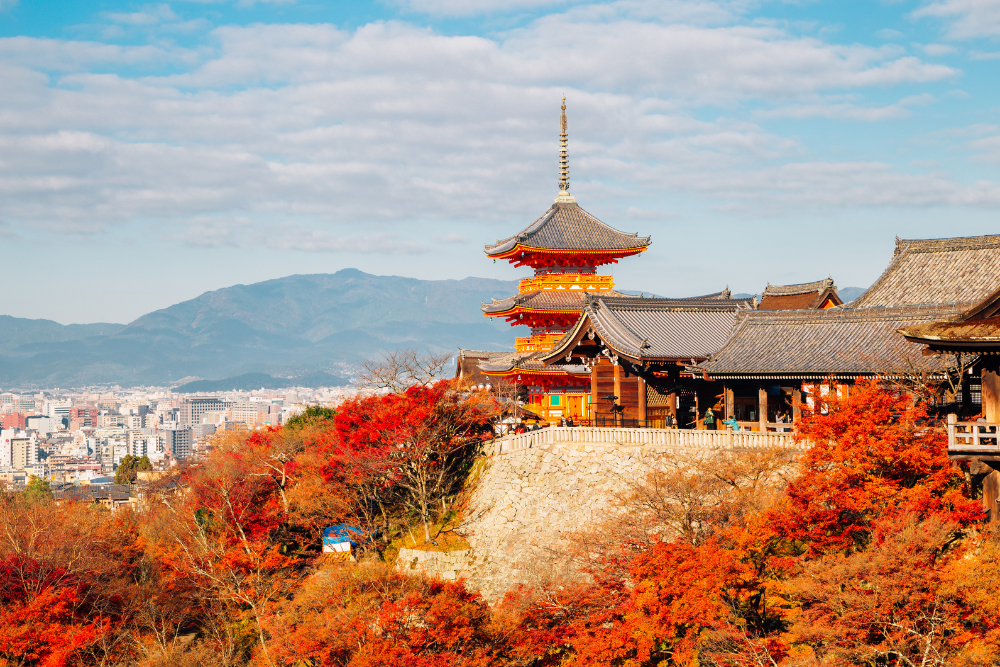
Why visit?
One of Kyoto’s most famous landmarks, Kiyomizu-dera Temple is spectacular during cherry blossom season. Built on a hillside, its iconic wooden stage overlooks a valley filled with 1,500 sakura trees, creating a stunning contrast against the temple’s traditional architecture.
Highlights:
- Panoramic views of Kyoto’s cherry blossoms from the temple’s stage
- A mix of somei yoshino and weeping cherry trees
- Nighttime illuminations create a magical atmosphere
Best time to visit: Late March to early April
Access: 15-minute walk from Kiyomizu-Gojo Station (Keihan Line)
2. Daigo-ji (Kyoto)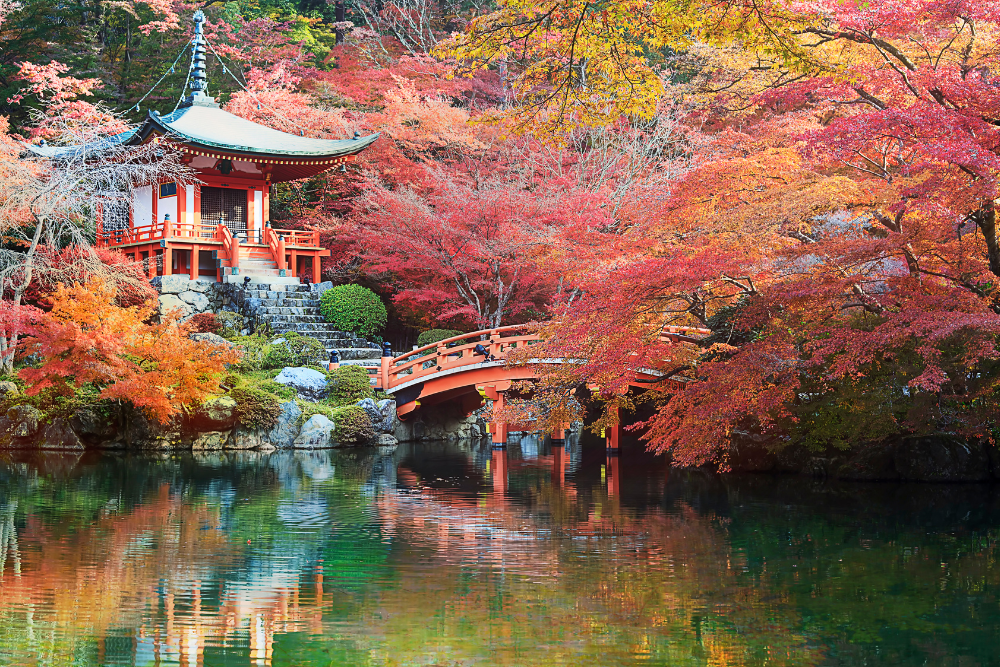
Why visit?
A UNESCO World Heritage Site, Daigo-ji Temple is one of Kyoto’s most famous hanami locations, known for its “Daigo no Hanami” festival, inspired by the cherry blossom viewing party of feudal lord Toyotomi Hideyoshi in 1598. The temple grounds feature hundreds of cherry trees, including breathtaking weeping sakura.
Highlights:
- The five-story pagoda framed by pink blossoms
- A mix of early- and late-blooming sakura, ensuring a long hanami season
- Historic connections to samurai-era hanami traditions
Best time to visit: Late March to early April
Access: 10-minute walk from Daigo Station (Tozai Line)
3. Heian Shrine (Kyoto)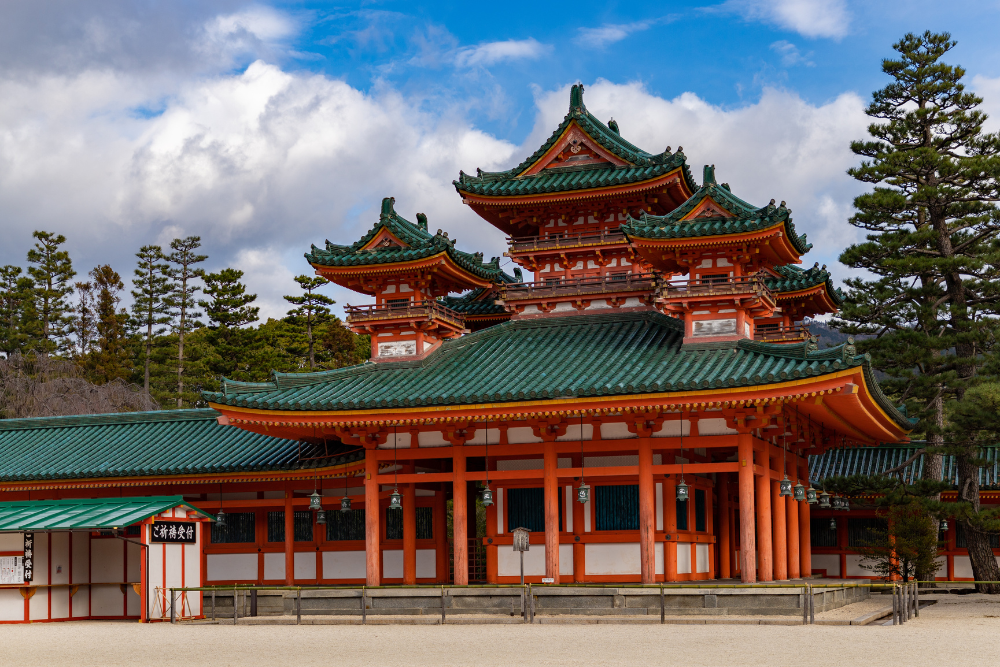
Why visit?
Heian Shrine’s weeping cherry trees are some of the most elegant in Kyoto. The shrine’s large torii gate, spacious gardens, and traditional architecture provide a serene setting for hanami. The cherry blossoms here bloom slightly later than Kyoto’s main sakura spots, making it a great place for late-season viewing.
Highlights:
- The shrine’s garden filled with cascading pink weeping cherry trees
- A peaceful, spacious environment away from the city’s main crowds
- Stunning reflections of cherry blossoms in the shrine’s pond
Best time to visit: Early to mid-April
Access: 10-minute walk from Higashiyama Station (Tozai Line)
4. Yoshino-yama (Nara)
Why visit?
Mount Yoshino is Japan’s most famous cherry blossom mountain, home to over 30,000 cherry trees. The area is dotted with historic temples and shrines, offering one of the most breathtaking cherry blossom landscapes in Japan.
Highlights:
- Layered cherry blossom views from different elevations
- Visit Kinpusen-ji Temple, a UNESCO World Heritage Site
- Experience traditional ryokan stays and hot springs in the area
Best time to visit: Early to mid-April
Access: 15-minute bus ride from Yoshino Station (Kintetsu Line)
5. Hasedera Temple (Nara)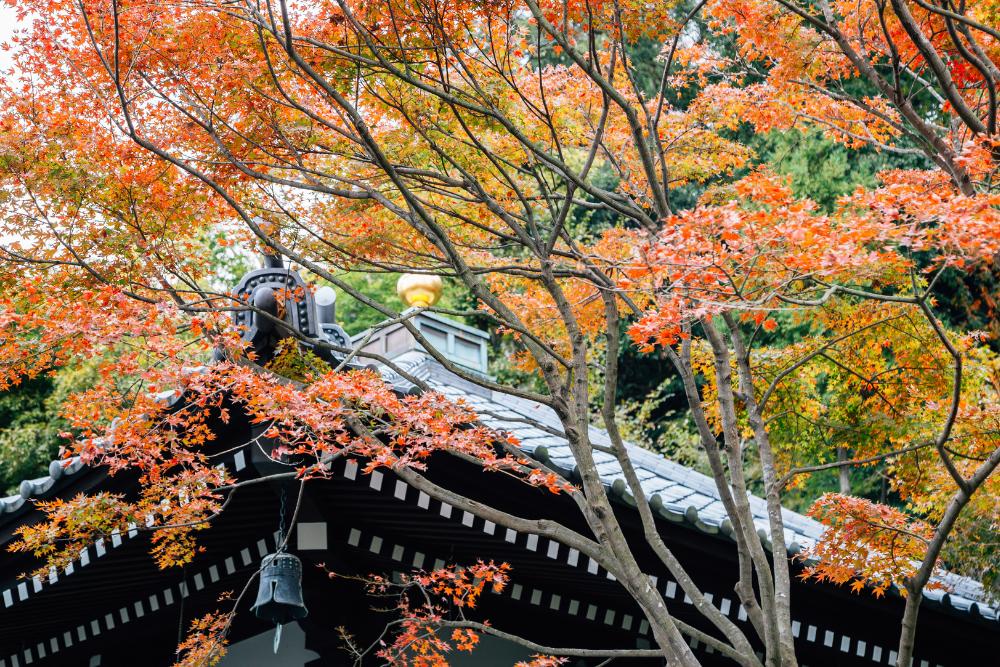
Why visit?
Hasedera Temple is one of the most underrated cherry blossom spots in Japan. Located in a quiet mountain valley, it features a long wooden corridor leading up to a temple hall surrounded by weeping cherry trees. The temple’s elevated location offers breathtaking views of sakura-covered hillsides.
Highlights:
- A peaceful and uncrowded hanami experience
- The temple’s five-story pagoda framed by cherry blossoms
- Late-blooming sakura, making it a great spot for April hanami
Best time to visit: Early to mid-April
Access: 10-minute walk from Hasedera Station (Kintetsu Osaka Line)
6. Miyajima (Itsukushima Shrine, Hiroshima)
Why visit?
Famous for its floating torii gate, Miyajima is one of Japan’s most picturesque cherry blossom locations. The island’s temples, shrines, and wild deer wandering among the sakura trees create a serene and photogenic atmosphere.
Highlights:
- The floating torii gate framed by cherry blossoms
- A blend of spiritual and natural beauty
- Explore nearby Daisho-in Temple, surrounded by sakura
Best time to visit: Late March to early April
Access: 10-minute ferry from Miyajimaguchi Station (JR Sanyo Line)
7. Chureito Pagoda (Fuji Five Lakes)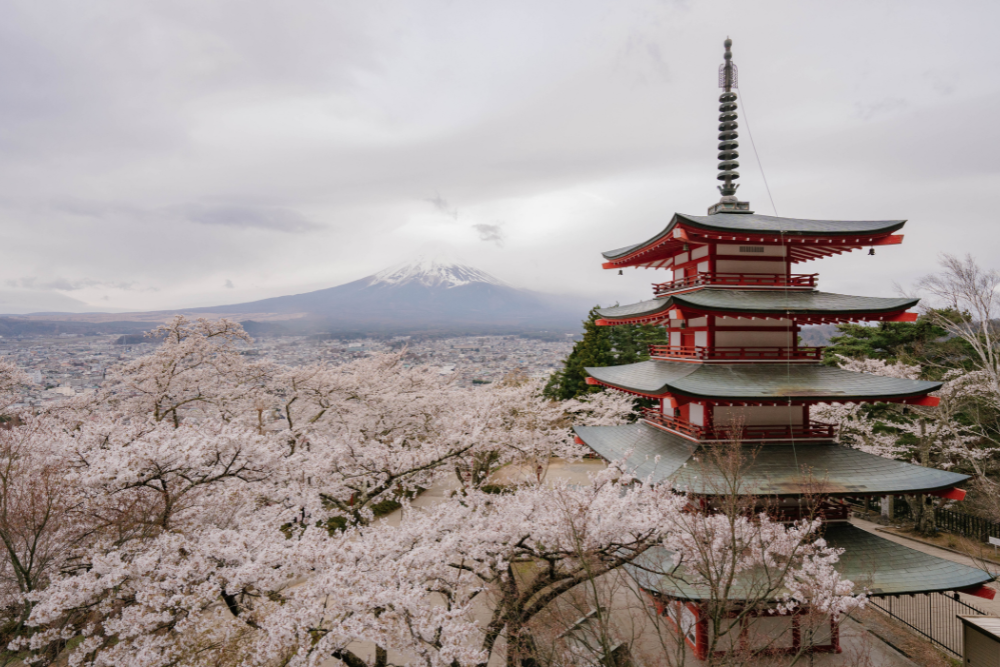
Why visit?
One of Japan’s most iconic cherry blossom photo spots, Chureito Pagoda offers a stunning panoramic view of Mount Fuji with cherry blossoms in full bloom. The contrast between the red pagoda, pink sakura, and snow-capped Fuji creates one of the most breathtaking sights in Japan.
Highlights:
- A postcard-perfect view of Mount Fuji framed by cherry blossoms
- A 700-step climb to the pagoda, offering rewarding views
- Best visited in the early morning for a peaceful experience
Best time to visit: Early to mid-April
Access: 20-minute walk from Shimoyoshida Station (Fujikyuko Line)
8. Hiraizumi Chuson-ji (Iwate)
Why visit?
For those exploring northern Japan, Chuson-ji Temple in Hiraizumi offers a tranquil hanami experience with cherry blossoms lining its historic golden hall and temple grounds. The site is a UNESCO World Heritage location, making it a must-visit for history lovers.
Highlights:
- A peaceful, uncrowded alternative to Kyoto’s famous temples
- Historic samurai connections and Buddhist heritage
- Late-blooming cherry blossoms, ideal for an April hanami trip
Best time to visit: Mid to late April
Access: 10-minute bus ride from Hiraizumi Station (JR Tohoku Line)
9. Zojo-ji Temple (Tokyo)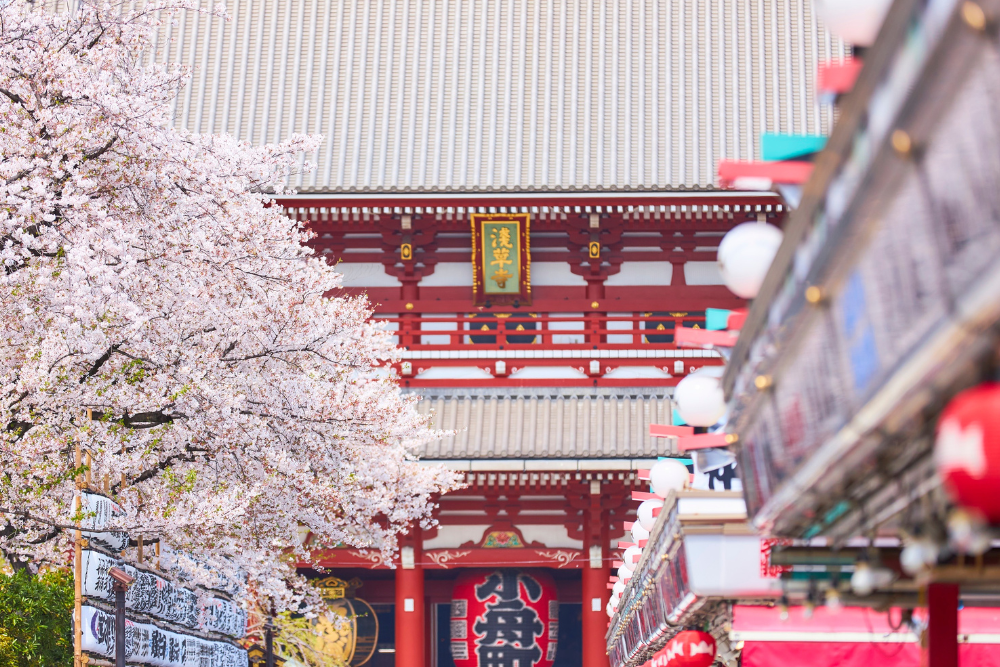
Why visit?
Zojo-ji Temple is a hidden cherry blossom gem in Tokyo, offering a striking contrast between historic Buddhist architecture and modern skyscrapers. The temple grounds feature hundreds of cherry trees, with Tokyo Tower rising dramatically in the background.
Highlights:
- Sakura-lined temple paths with Tokyo Tower views
- A mix of somei yoshino and weeping cherry trees
- Less crowded than popular Tokyo hanami parks
Best time to visit: Late March to early April
Access: 5-minute walk from Onarimon Station (Toei Mita Line)
Conclusion
For a spiritually enriching hanami experience, Japan’s temples and shrines provide some of the most stunning cherry blossom scenery. Whether you visit Kiyomizu-dera’s panoramic stage, Daigo-ji’s historic sakura festival, or the iconic Chureito Pagoda with Mount Fuji in the background, each location offers a unique blend of nature, history, and tradition.
For the best experience, plan ahead, check bloom forecasts, and visit during early morning or nighttime illuminations for a more serene atmosphere.