



Switzerland is best known for its majestic alpine peaks, crystal-clear lakes, and charming mountain villages. But beyond its postcard-perfect scenery, the country is home to some of the most bizarre and otherworldly rock formations in Europe. From towering sandstone pillars to surreal glacier-carved landscapes, Switzerland’s unique geology tells stories of ancient glaciers, tectonic shifts, and millions of years of erosion.
For travelers seeking something off the beaten path, here are Switzerland’s most unusual rock formations and landscapes that will leave you in awe.
1. Creux du Van – Switzerland’s Grand Canyon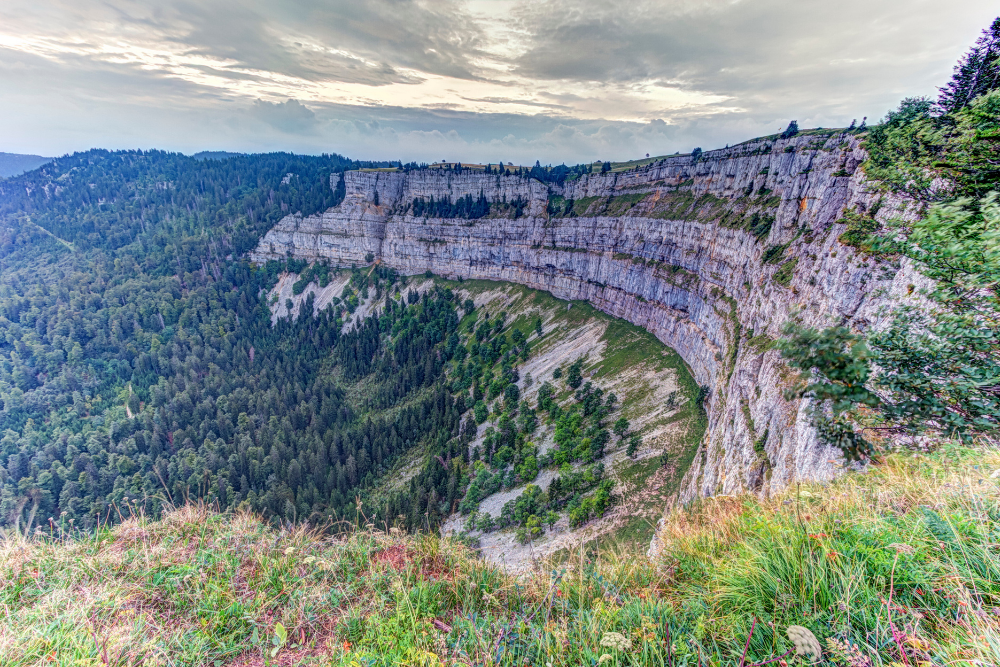
Location: Val-de-Travers, Neuchâtel
Why It’s Special: A dramatic horseshoe-shaped rock amphitheater
Often called “Switzerland’s Grand Canyon,” Creux du Van is a breathtaking 1,400-meter-wide and 160-meter-deep limestone cirque formed by glaciers and erosion over thousands of years. The sheer rock walls drop dramatically into the valley below, offering some of the most striking views in the Jura Mountains.
Best Experiences:
- Hike to the summit on a 14-kilometer trail for panoramic views
- Spot wildlife such as ibex, chamois, and marmots
- Visit at sunrise for spectacular golden light over the cliffs
Nearby, the Asphalt Mines of Val-de-Travers provide an interesting glimpse into Switzerland’s industrial history.
2. The Rheinschlucht (Swiss Grand Canyon)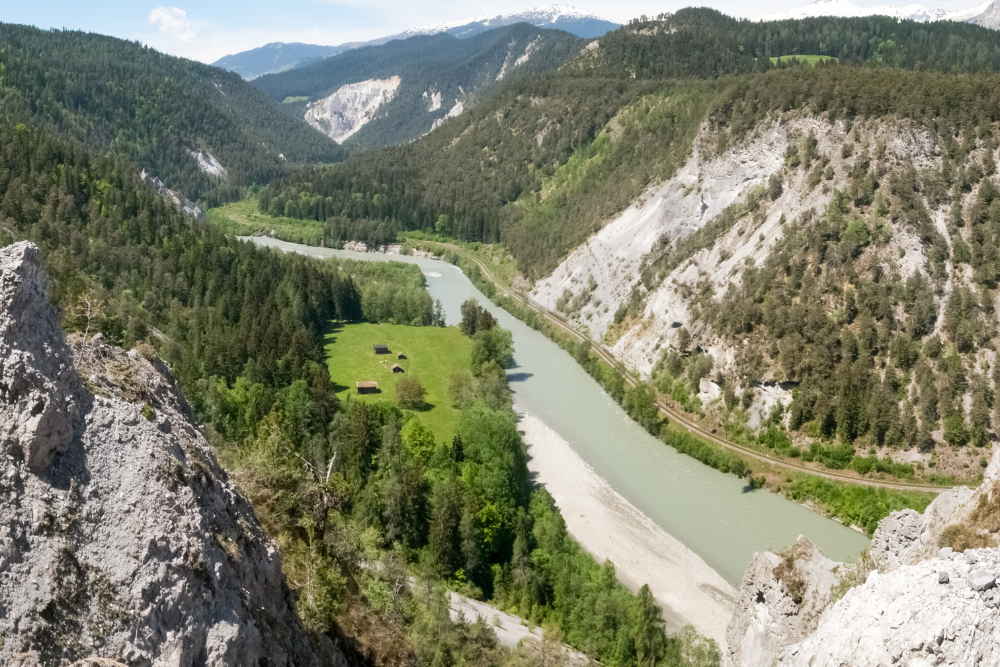
Location: Graubünden
Why It’s Special: A dramatic river gorge with white limestone cliffs
The Rheinschlucht, or Rhine Gorge, is often compared to the Grand Canyon on a smaller scale. Formed after the Flims Rockslide 10,000 years ago, the Rhine River carved a deep gorge with towering white limestone cliffs and surreal rock formations.
Best Experiences:
- Take the Glacier Express for stunning views through the gorge
- Explore hiking and biking trails along the river
- Experience whitewater rafting on the Rhine
A visit to the nearby Caumasee, a turquoise lake surrounded by pine forests, adds to the experience.
3. The Glarus Thrust – Where Mountains Flip Upside Down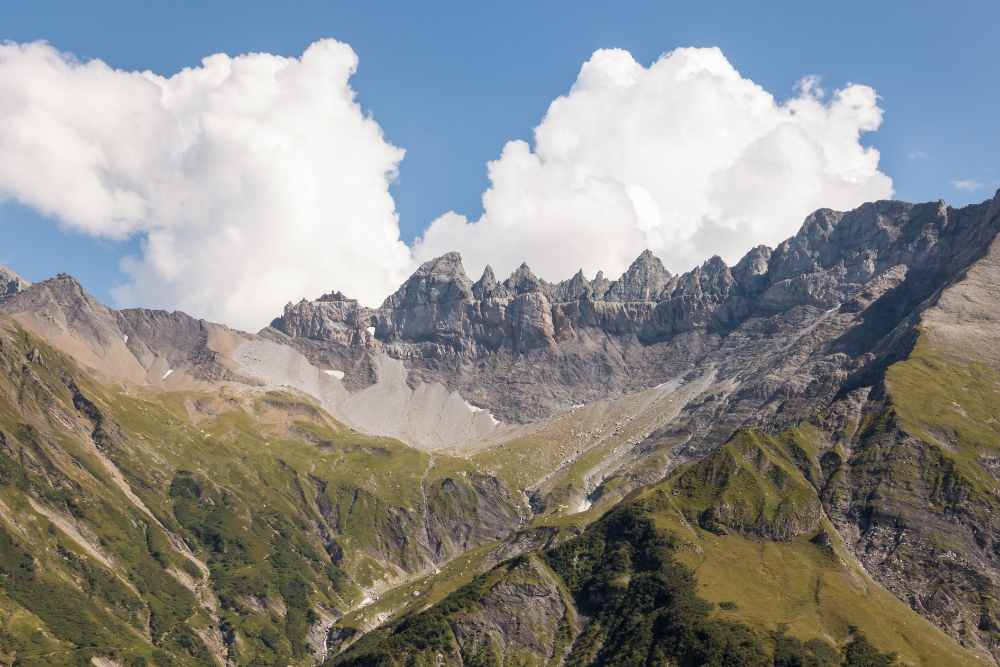
Location: Elm, Glarus
Why It’s Special: A UNESCO-listed geological phenomenon where older rocks lie on top of younger rocks
The Glarus Thrust is one of the most fascinating geological wonders in the Alps. Here, ancient 250-million-year-old rocks sit on top of much younger 35-million-year-old rocks, a result of tectonic forces that pushed the layers out of order. This rare phenomenon is recognized as a UNESCO World Heritage Site.
Best Experiences:
- Visit the Tectonic Arena Sardona to learn about the unique rock formations
- Hike to Martinsloch (Martin’s Hole), a natural hole in the rock where sunlight shines through twice a year
A cable car ride in Elm provides access to stunning mountain views.
4. Verzasca Valley’s Water-Sculpted Rocks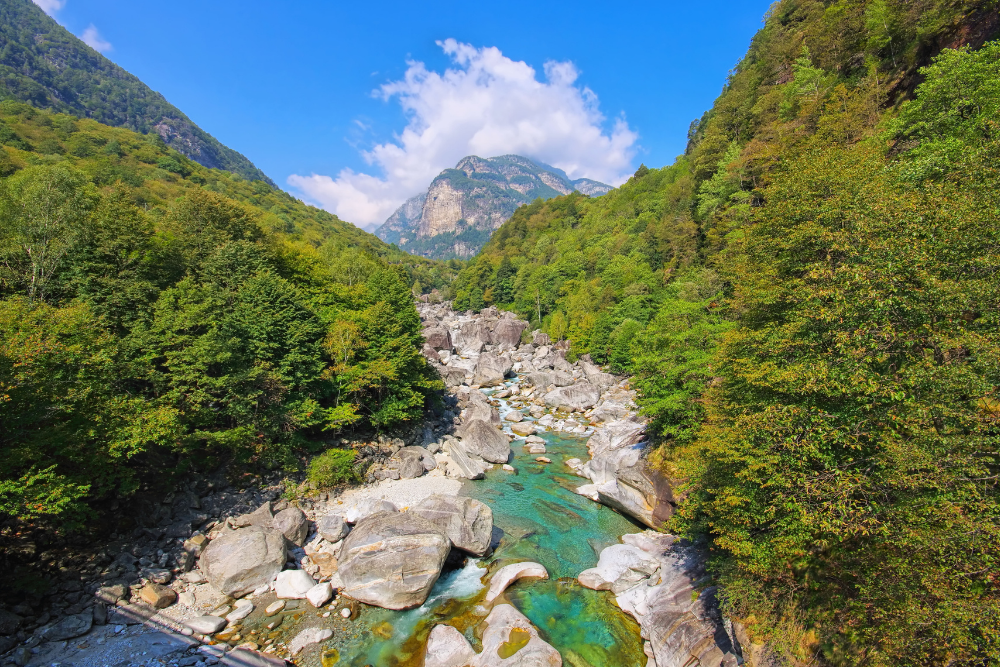
Location: Ticino
Why It’s Special: An emerald-green river flowing through surreal rock formations
The Verzasca Valley is famous for its emerald-green river that flows through smooth, curving rock formations. Over time, the water has carved out surreal shapes in the white and gray granite, creating a dreamlike landscape.
Best Experiences:
- Swim in the crystal-clear pools during summer
- Cross the medieval Ponte dei Salti bridge over the Verzasca River
- Capture stunning photographs of the contrast between the green waters and sculpted rock
Locarno and Ascona, both nearby, offer charming lakeside experiences.
5. The Ruinaulta Rockslide – The Swiss Dolomites
Location: Flims, Graubünden
Why It’s Special: Towering white rock spires formed by a prehistoric rockslide
The Ruinaulta, also known as the Flims Rockslide, was created over 10,000 years ago when a massive rockslide reshaped the landscape, leaving behind jagged white spires and cliffs. This region is often called the Swiss Dolomites due to its striking limestone formations.
Best Experiences:
- Hike to the Il Spir viewpoint for a panoramic view over the canyon
- Kayak on the Rhine River for a close-up experience
- Explore mountain biking trails through the rugged terrain
A visit to the nearby Lake Cauma, known for its turquoise waters, is highly recommended.
6. Aletsch Glacier – A Frozen River of Ice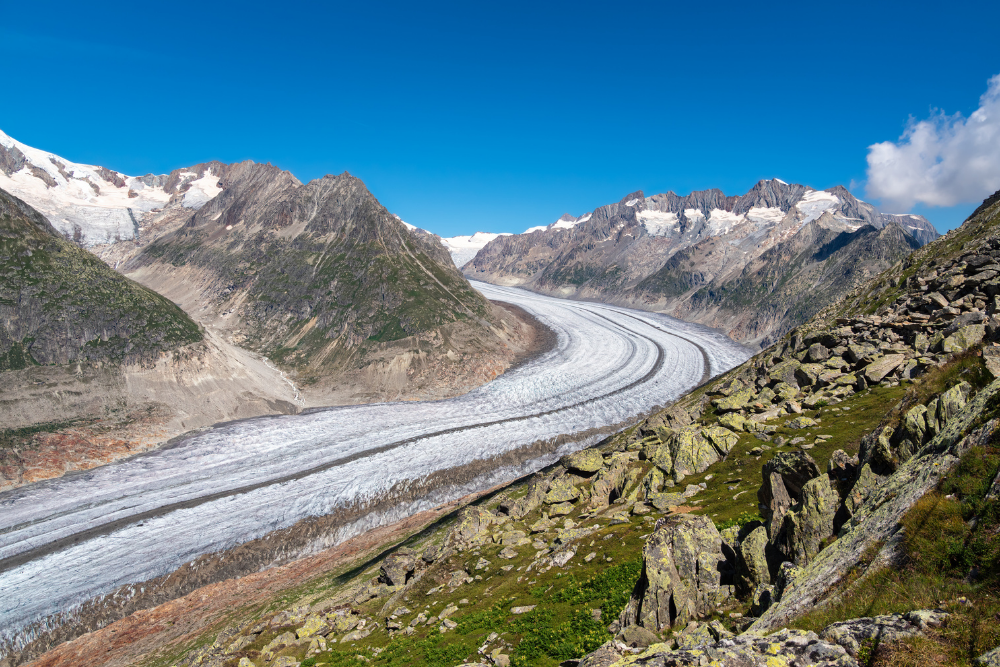
Location: Valais
Why It’s Special: The largest glacier in the Alps, stretching over 23 kilometers
The Aletsch Glacier is a UNESCO World Heritage Site and the largest glacier in the Alps. This frozen giant, carved over millennia, winds its way through the mountains, creating an otherworldly landscape of crevasses, ice caves, and moraine ridges.
Best Experiences:
- Take the Eggishorn cable car for the best panoramic views of the glacier
- Join a guided glacier hiking tour
- Visit the Ice Stupa in Bettmeralp, a unique ice structure built in winter
The Jungfraujoch, also known as the “Top of Europe,” offers another opportunity to experience Switzerland’s icy landscapes.
7. The Natural Pyramids of Euseigne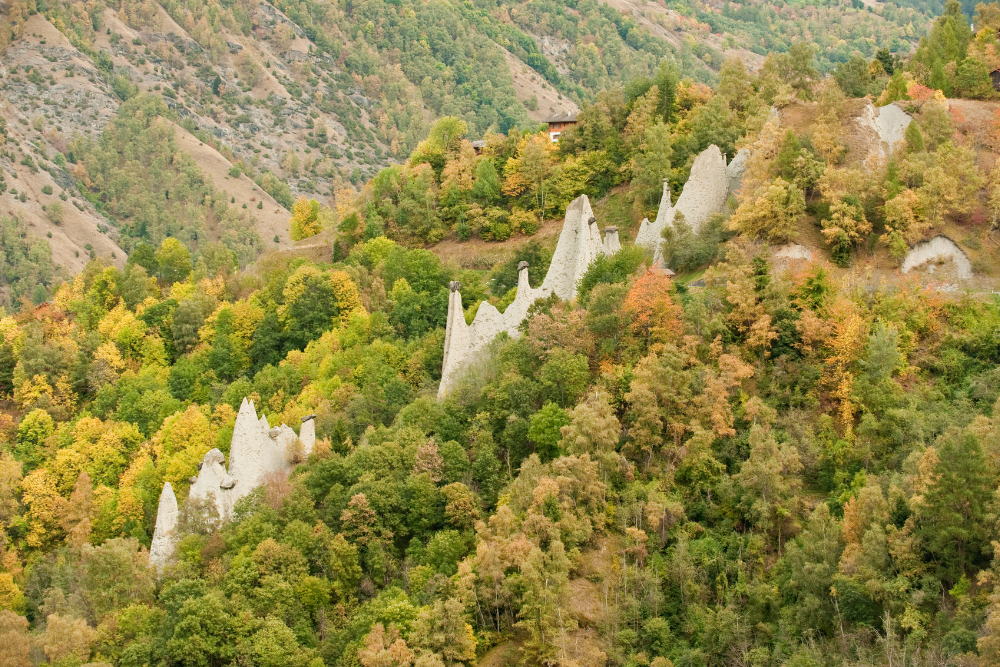
Location: Val d’Hérens, Valais
Why It’s Special: Eroded earth pillars capped with protective stones
The Pyramids of Euseigne are among Switzerland’s strangest natural formations. These earth pyramids were formed as glaciers retreated, leaving behind tall, cone-shaped pillars capped with large boulders. These “hats” protect the softer earth underneath from eroding completely.
Best Experiences:
- Drive through the pyramids, as the main road passes directly through the formations
- Hike the short trail around the pyramids for up-close views
- Visit at sunset for dramatic lighting over the formations
Nearby, the Grande Dixence Dam, one of the world’s tallest gravity dams, offers impressive engineering and scenic views.
Conclusion
Switzerland’s unusual rock formations and landscapes offer a glimpse into the country’s incredible geological history. Whether it is glacier-carved valleys, towering limestone cliffs, or bizarre rock spires, these destinations promise breathtaking views and unforgettable adventures.
For those who enjoy exploring landscapes shaped by nature’s forces over millions of years, Switzerland offers a wealth of hidden geological wonders waiting to be discovered.