



Lyon, France’s third-largest city, is often overshadowed by the glamour of Paris and the Mediterranean charm of Nice. However, this UNESCO World Heritage site is a hidden gem, brimming with rich history, cultural heritage, and architectural splendor. Steeped in the past, Lyon’s streets are an open-air museum where every corner reveals something from centuries gone by. From ancient Roman ruins to Renaissance architecture, the city offers a fascinating journey through French history. Let’s take a closer look at the top historical sites in Lyon and why they should be on every traveler’s list.
1. Vieux Lyon (Old Lyon) – A Step Back in Time
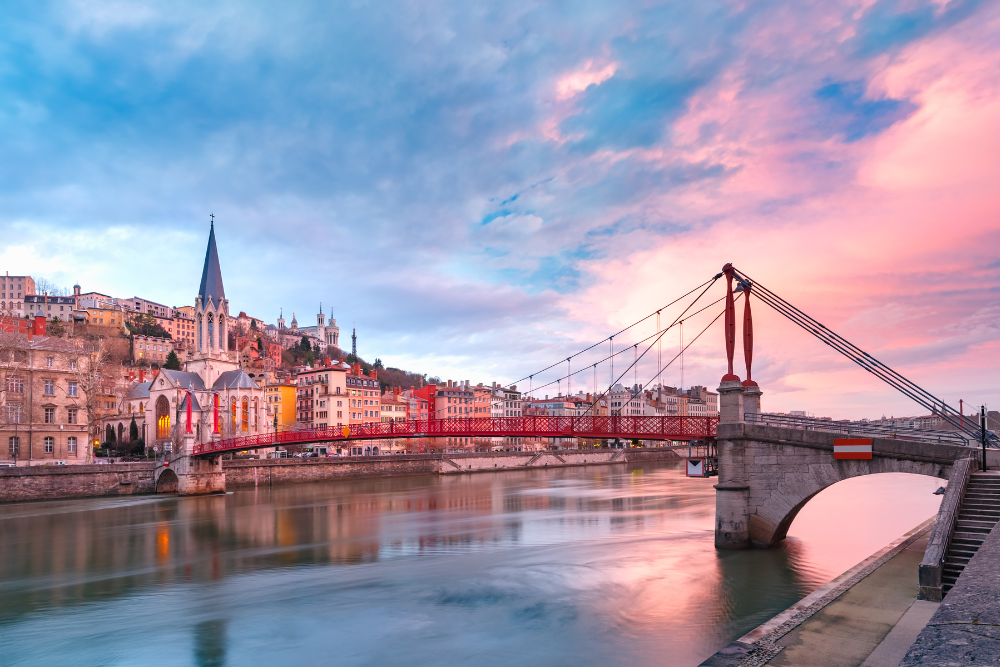 The heart of Lyon’s historical charm is undoubtedly Vieux Lyon, its old town, which dates back to the Renaissance period. A maze of narrow, cobblestone streets and colorful buildings, Vieux Lyon is a stunning example of Renaissance architecture. The district has remained remarkably well-preserved over the centuries and is an absolute must-visit for history lovers.
Key Highlights:
- Saint-Jean Baptiste Cathedral: A Gothic masterpiece dating back to the 12th century, the cathedral is renowned for its stunning stained-glass windows and astronomical clock.
- Traboules: These secret passageways, which connect the different buildings and streets, are a distinctive feature of the district. They were originally built for silk workers to transport their goods and are now a symbol of Lyon’s rich textile history.
Wandering through Vieux Lyon, visitors can immerse themselves in the atmosphere of medieval and Renaissance France, and the charming cafés and shops only add to the historical experience.
2. Basilica of Notre-Dame de Fourvière – The Jewel of Lyon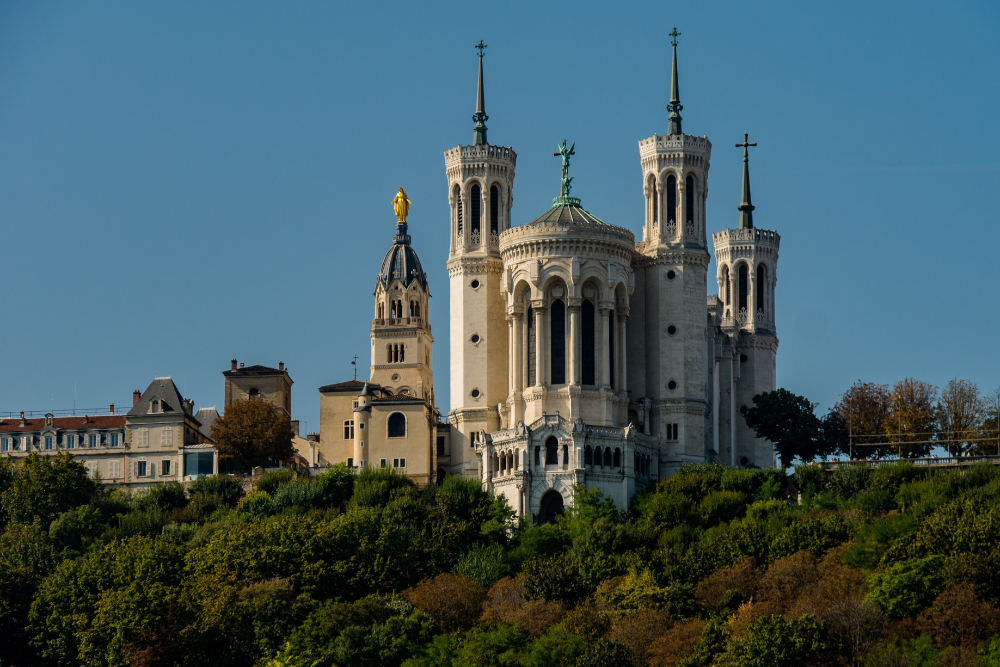
Perched on the hill of Fourvière, the Basilica of Notre-Dame de Fourvière is one of Lyon’s most iconic landmarks. This stunning basilica offers not only breathtaking views of the city but also a rich history that dates back to the 19th century.
Why Visit:
The basilica was built to honor the Virgin Mary, who is said to have protected the city from the plague. The interior of the church is adorned with exquisite mosaics, gold leaf, and intricate sculptures, making it a masterpiece of French religious architecture. Visitors can take the funicular or hike up to the basilica for spectacular panoramic views of Lyon and its surrounding areas.
The basilica’s history is intertwined with the city’s resilience and religious devotion, and it stands as a proud testament to Lyon’s historical significance.
3. Lyon’s Roman Amphitheatre – Ancient Rome in the Heart of the City
Lyon’s history as a Roman city dates back to the firs 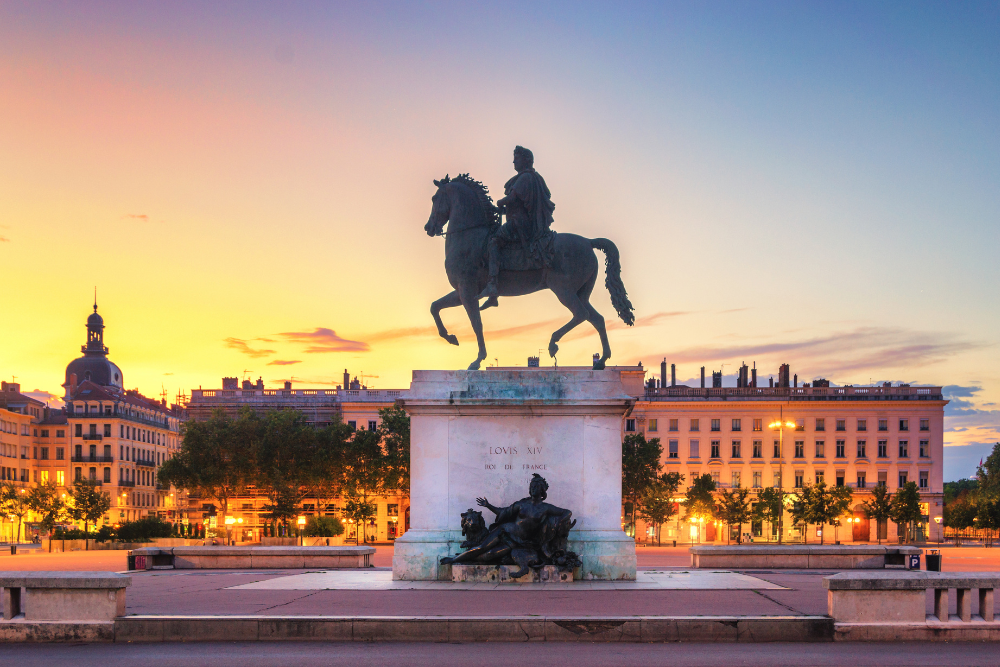 t century BC, when it was known as Lugdunum. The Roman legacy is still visible today, particularly in the Roman Theatres of Lyon, located on the hill of Fourvière.
Key Highlights:
- The Ancient Theatre of Lyon: Built around 15 BC, this open-air theater could once hold up to 10,000 spectators. It is still used today for performances and festivals, maintaining its ancient charm.
- The Odeon of Lyon: Situated nearby, this smaller Roman theater was used for more intimate performances, and its ruins provide insight into the scale and design of ancient Roman entertainment venues.
These ruins offer a fascinating glimpse into Lyon’s role in the Roman Empire and its legacy in shaping the city’s culture and architecture.
4. Place Bellecour – A Monument to French Royalty
Place Bellecour is one of the largest public squares in Europe and one of Lyon’s most significant landmarks. This vast open space is a focal point of the city and has played a central role in Lyon’s history for centuries.
Why Visit:
The square was originally created in the 18th century and is home to a statue of King Louis XIV, a symbol of Lyon’s historical connection to the French monarchy. In addition to the statue, Place Bellecour is surrounded by beautiful neoclassical buildings that reflect Lyon’s architectural evolution through the centuries.
The square has long been a site for public gatherings and celebrations, and it remains a hub of activity in the city today.
5. Musée Gallo-Romain de Lyon-Fourvière – Journey into Ancient Roman Lyon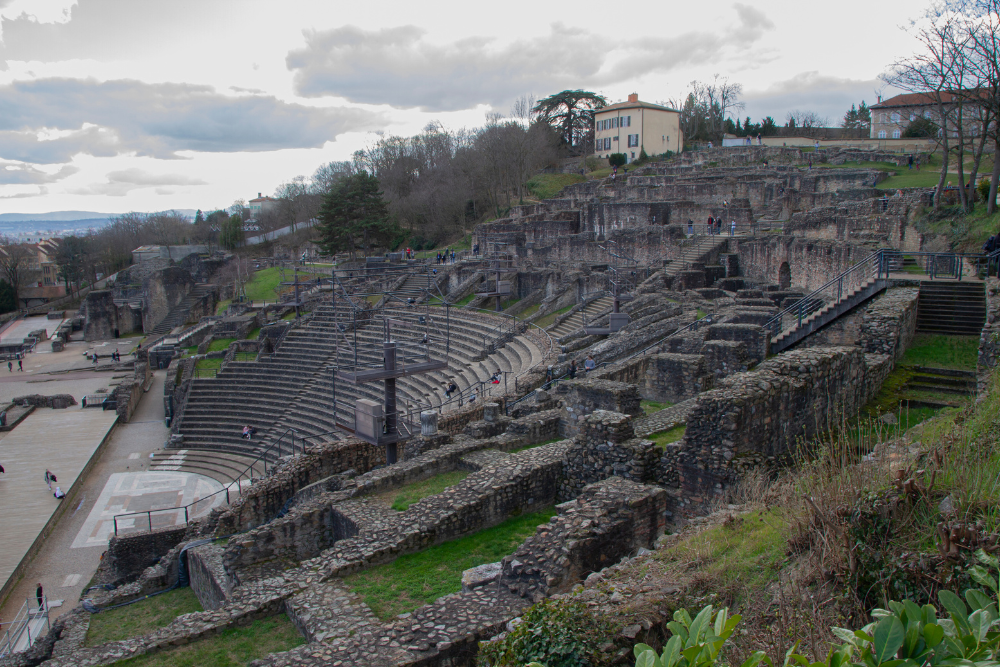
For those interested in ancient history, the Musée Gallo-Romain de Lyon-Fourvière is a treasure trove of artifacts from Lyon’s Roman past. Situated near the Roman amphitheaters on the hill of Fourvière, this museum offers a fascinating insight into the daily life, art, and architecture of the Roman city of Lugdunum.
Why Visit:
The museum houses an extensive collection of Roman relics, including mosaics, sculptures, everyday objects, and even remnants of Roman baths. One of the museum’s highlights is the reconstructed Mosaic of the Four Seasons, an extraordinary piece that depicts the cyclical nature of life in the Roman era.
The museum provides a deeper understanding of the role Lyon played as a Roman metropolis, offering visitors a chance to explore Lyon’s history from a unique perspective.
6. The Hôtel de Ville – Lyon’s City Hall and Political Heart
The Hôtel de Ville (City Hall) of Lyon is a magnificent example of Renaissance architecture and one of the city’s most important historical buildings. Located in the heart of Presqu’île, Lyon’s central peninsula, the Hôtel de Ville has been the seat of the city’s administration for centuries.
Why Visit:
The building itself is an architectural masterpiece, with its ornate façade and grandiose interior. It also houses the Musée des Beaux-Arts de Lyon (Museum of Fine Arts), one of the largest fine arts museums in France, with a rich collection spanning from ancient Egypt to modern times.
Visitors can explore the Hôtel de Ville’s historical significance in both politics and culture, making it a must-visit for those seeking to understand Lyon’s legacy in French governance and art.
7. Les Canuts and the Silk Industry: Lyon’s Textile Legacy
Lyon’s history as a center of the silk industry is central to the city’s identity. The Canuts, the workers who produced silk in Lyon during the 19th century, played a crucial role in shaping the city’s economy and culture. Today, the Croix-Rousse district, where the silk workers once lived and worked, remains a vibrant area that honors Lyon’s textile heritage.
Why Visit:
The Maison des Canuts offers visitors the chance to learn about Lyon’s silk industry and its importance in the city’s growth. The museum showcases the tools and techniques used by the Canuts and highlights the pivotal role the industry played in Lyon’s rise to prominence. You can also visit traditional silk workshops in the area to see the craftsmanship in action.
Exploring the Croix-Rousse district gives a sense of the working-class history of Lyon, and it remains a culturally rich part of the city today.
8. Lyon’s Resistance History – A City of Defiance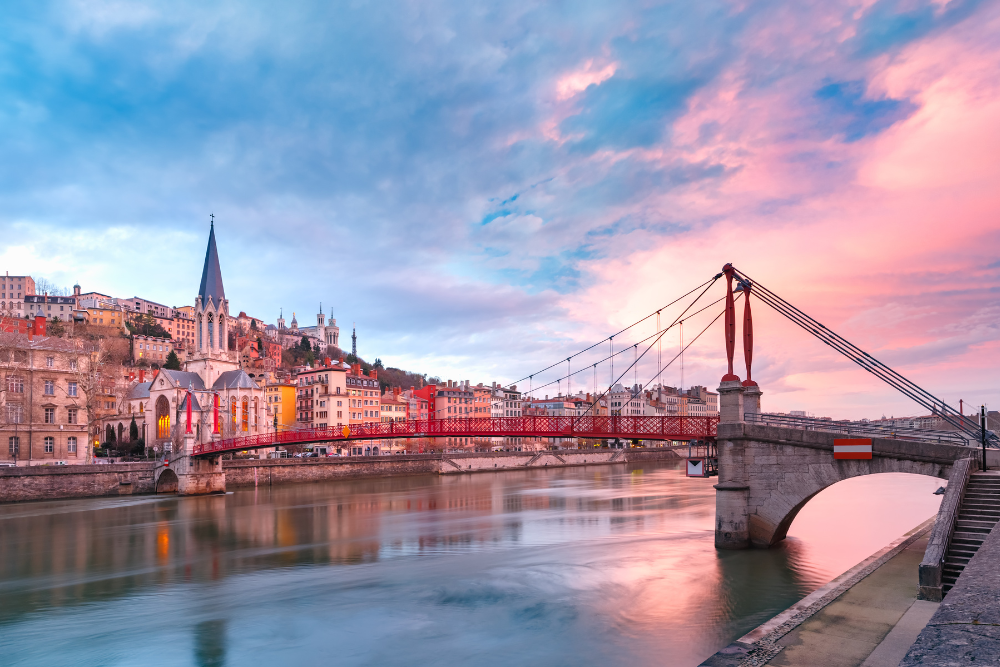
Lyon’s history during World War II is a powerful testament to the city’s spirit of resistance. The city was a stronghold of the French Resistance against the Nazi occupation, and several sites in Lyon commemorate this heroic period in history.
Key Highlights:
- Musée de la Résistance et de la Déportation: This museum, located on the hill of Fourvière, is dedicated to the history of the French Resistance and the deportation of Jews during the war. It offers a poignant look at the courage of Lyon’s citizens during this dark chapter of history.
- The Memorial of the Martyrs of the Resistance: This memorial is dedicated to the men and women who fought against the Nazis in Lyon and the surrounding region.
These sites offer a sobering and educational glimpse into the resilience of Lyon’s citizens during one of the most challenging periods of French history.
Conclusion
Lyon’s historical sites offer a captivating journey through centuries of French history, from its Roman origins to its pivotal role in the French Resistance. Whether you’re strolling through the Renaissance streets of Vieux Lyon, marveling at the ancient Roman theaters, or exploring the city’s vibrant silk industry heritage, there’s no shortage of historical wonders to discover in this fascinating city. Lyon’s rich cultural tapestry is woven through its monuments, museums, and neighborhoods, making it a must-visit destination for history lovers. A journey through Lyon is not just a walk through time—it’s a chance to experience the heart and soul of France.